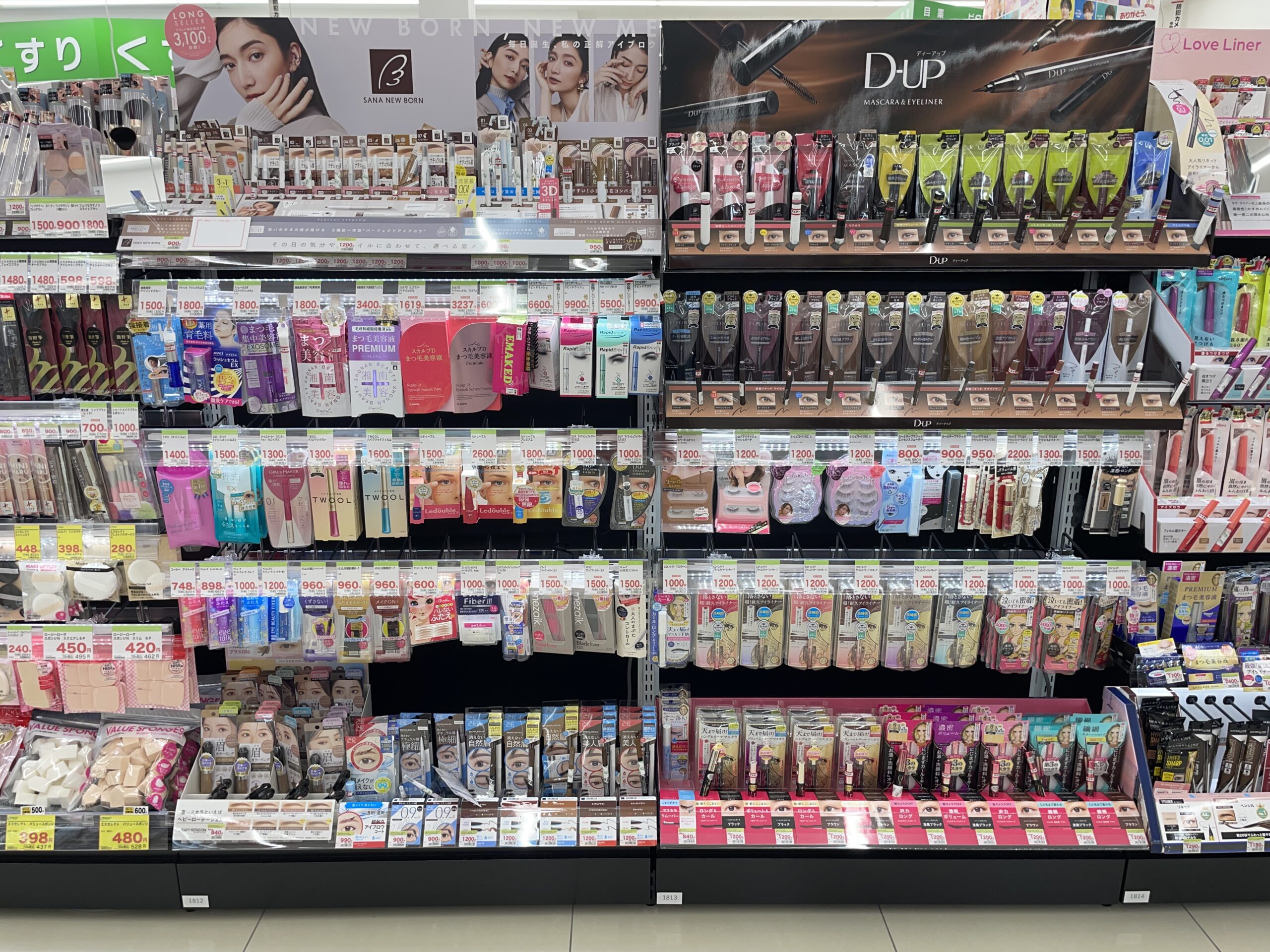
You land in Japan, jet-lagged and slightly overwhelmed, and someone on the internet told you to go to a drugstore. A drugstore. Not Shibuya Crossing, not a depachika basement — a drugstore.
Here’s the thing: that person was absolutely right.
Japanese drugstores — called 薬局 (yakkyoku) or ドラッグストア (doraggu sutoa) — are part pharmacy, part beauty salon, part convenience store, and part black hole for your wallet. Locals stop in on the way home from work. Tourists stop in and somehow leave with a basket full of things they didn’t know existed an hour ago.
I live in Tokyo. I have watched this happen many, many times. I have been this person many times.
This guide covers what’s actually worth buying, what locals actually buy (spoiler: different things), rough price ranges, and a few cultural quirks that make Japanese drugstores unlike anything back home.
—
- The Big Chains to Know
- What Locals Actually Buy (When They’re Sick)
- What Locals Buy for Daily Life (The Bulk Basket)
- What Tourists Go Crazy For: Skincare
- Sunscreen: The Hidden Gem Every Tourist Misses (Then Comes Back For)
- Eye Drops: The Cooling Sensation That Surprises Everyone
- Health Drinks and Supplements: Japan’s Quiet Wellness Culture
- Common Tourist Mistakes at Japanese Drugstores
- A Note on Locals vs. Tourists: Same Store, Different Universe
- Quick Reference: What to Buy and What to Pay
- Final Thoughts: The Drugstore Is the Souvenir Shop
The Big Chains to Know
Before you wander in looking lost, it helps to know which stores you’re walking into. Japan’s major drugstore chains are everywhere, and each has a slightly different vibe.
- Matsukiyo (マツモトキヨシ) — The iconic yellow-and-black stores. Tourist-friendly, English signage in big cities, huge beauty section.
- Tsuruha Drug (ツルハドラッグ) — Popular with locals. Great for daily goods and loyalty points if you’re staying a while.
- Sugi Yakkyoku (スギ薬局) — More pharmacy-focused, solid for medicines and supplements.
- Sun Drug (サンドラッグ) — Known for competitive pricing. Locals love it for bulk deals.
- Welcia (ウエルシア) — Slightly more everyday-grocery feel. Strong in suburbs.
Most of these now offer tax-free shopping (免税) for tourists on purchases over ¥5,000 at a single store. Bring your passport — you’ll need it at the counter.
—
What Locals Actually Buy (When They’re Sick)
There’s a quiet cultural norm in Japan: before going to the hospital for a minor cold, you go to the drugstore first. It’s a “self-care before clinic” mindset that runs deep.
Walk into any drugstore in cold season and you’ll see Japanese customers heading straight — no browsing, no hesitation — to a few specific things:
- Kakkonto (葛根湯) — A traditional kampo (herbal) medicine taken at the very first sign of a cold. Think of it as Japan’s “get ahead of it” remedy. A box from brands like Kracie runs around ¥800–¥1,500. I keep this in my medicine cabinet at all times.
- Pabron (パブロン) — Japan’s most trusted OTC cold medicine brand. The Gold A series covers sneezing, runny nose, fever, and sore throat in one tablet. Around ¥700–¥1,200 for a pack.
- Throat spray (のどスプレー) — Particularly popular brands like Nodo Nurunuru or Isodine. Used at the first scratch of a sore throat.
- Energy drinks (栄養ドリンク) — The small brown glass bottles like Lipovitan D or Yunker. Not your Western energy drink — these are medical-grade fatigue fighters. About ¥150–¥300 each. Office workers drink these like it’s nothing.
- Face masks — Japanese masks (not sheet masks — medical-style face masks) are a year-round staple. During cedar pollen season in spring, entire display walls turn into mask shrines.
One interesting local habit: people genuinely believe that a medicine with more ingredients listed on the box works better. Is this scientifically valid? Unclear. Is it very Japanese? Absolutely.
—
What Locals Buy for Daily Life (The Bulk Basket)
Here’s a scene you will witness in any Japanese drugstore: someone picks up a basket “just for one or two things” and ends up with five identical boxes of the same product because they’re on sale.
This is not a tourist thing. This is a very Japanese thing.
Common everyday bulk buys include:
- Eye drops — More on this shortly, but Japanese eye drops are almost a daily ritual for many people. A bottle of Rohto or Santen lasts about a month. Locals buy two or three at a time.
- Sheet masks — Yes, locals use them too — regularly, not just as a treat. Brands like Lululun (around ¥1,500 for 32 sheets) are bought in big packs.
- Vitamin supplements — Collagen, Vitamin C, DHEA, CoQ10. Health supplements are taken seriously here and bought routinely, not as a wellness trend.
- Sanitary and household goods — Toothbrushes, detergent, tissue packs. Drugstores here often beat supermarkets on everyday necessities in price.
If something is on sale (特売 / tokubai), Japanese shoppers will absolutely stock up. There’s no shame — in fact, it’s considered practical common sense.
—
What Tourists Go Crazy For: Skincare
This is the big one. The reason travel bloggers write about Japanese drugstores. The reason suitcases come home 3kg heavier than they arrived.
Japanese skincare is genuinely excellent and genuinely affordable. Not “affordable for luxury skincare” — actually affordable.
Face Wash
The most famous is Biore Marshmallow Whip (ビオレ マシュマロホイップ) — a face wash that comes out as foam and is beloved for its gentle but thorough cleanse. Around ¥800–¥1,000. Another top pick: Cow Brand Mutenka Soap (牛乳石鹸 無添加泡のせっけん) at about ¥300–¥400 — simple, effective, and a favourite of minimalists.
Toner / Lotion (化粧水)
Confusing terminology alert: in Japan, “lotion” (化粧水, kesho-sui) means toner, not moisturiser. The two most tourist-beloved options:
- Hada Labo Gokujun Lotion (肌ラボ 極潤) — hyaluronic acid toner that plumps skin noticeably. Around ¥800–¥1,000 for 170ml. Buy the large pump bottle for value.
- Curel Moisture Lotion — ceramide-based, great for sensitive or dry skin. Around ¥1,500–¥2,000.
Sheet Masks
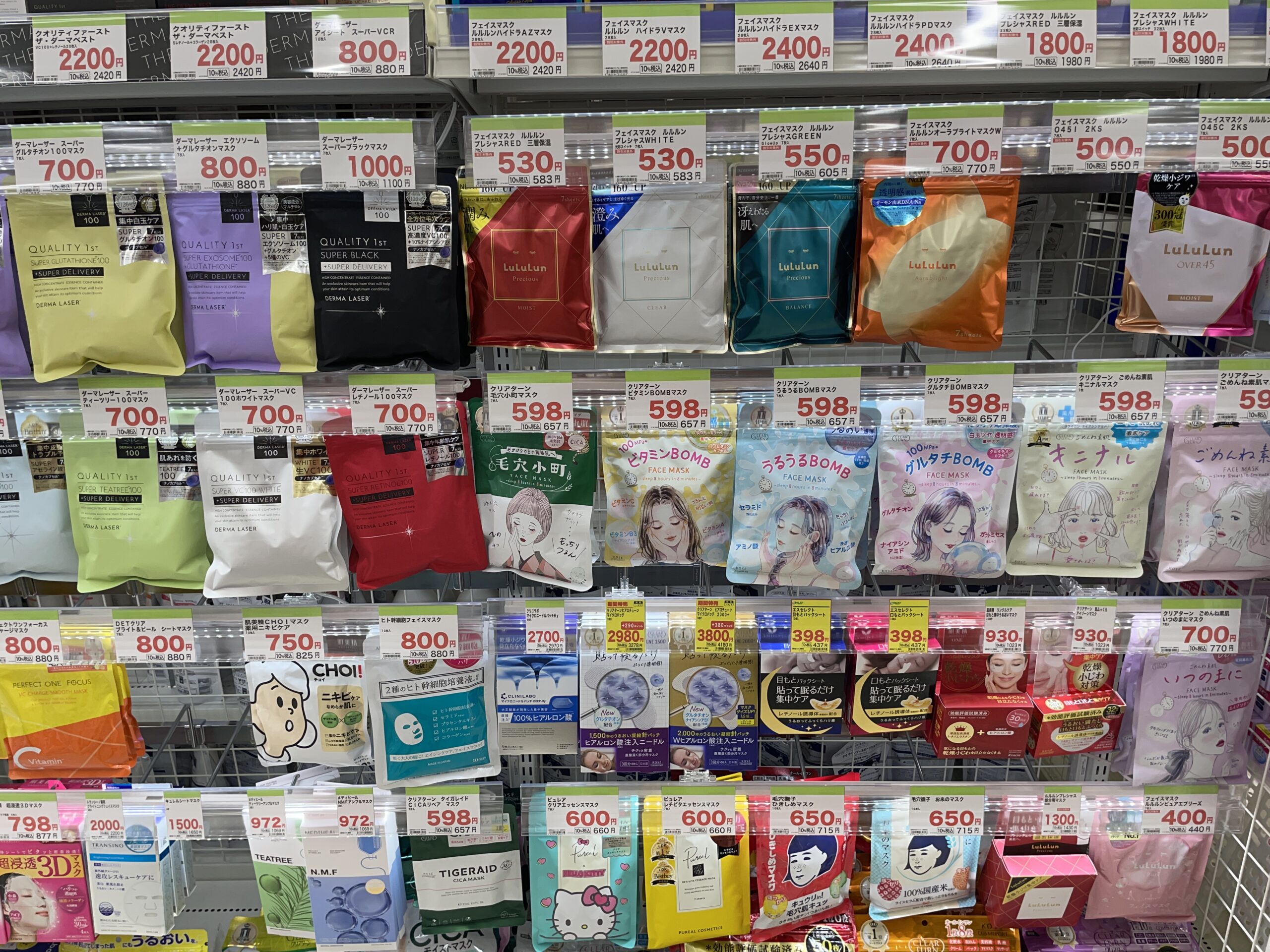
Tourists don’t buy one. They buy ten. Sometimes the whole box.
- Lululun Face Mask — ¥1,500 for 32 sheets. Good daily mask. Regional flavours (Hokkaido rose, Kyoto green tea) make great souvenirs.
- My Beauty Diary (我的美麗日記) — Taiwanese brand that sells exceptionally well in Japan. Around ¥1,200–¥1,500 for 8 sheets.
- Kose Clear Turn Essence Mask — A budget but solid choice at around ¥600–¥800 for 30 sheets.
There’s a very specific scene in every Japanese drugstore: a tourist carefully reading the back of a sheet mask (in Japanese they cannot read), while a local walks past them at full speed, grabs their usual brand without breaking stride, and is at the register before the tourist has put anything in their basket.
Both are having a fine time. Just at different speeds.
—
Sunscreen: The Hidden Gem Every Tourist Misses (Then Comes Back For)
Japanese sunscreen is not like Western sunscreen. It is not the thick white paste that makes you look slightly ghostly. Japanese sunscreen is:
- Feather-light — some feel like water
- Non-greasy — goes under makeup seamlessly
- High SPF and PA rating — PA++++ is the maximum UV-A protection rating in Japan
- Often skincare-infused — moisturising, brightening, pore-minimising versions all exist
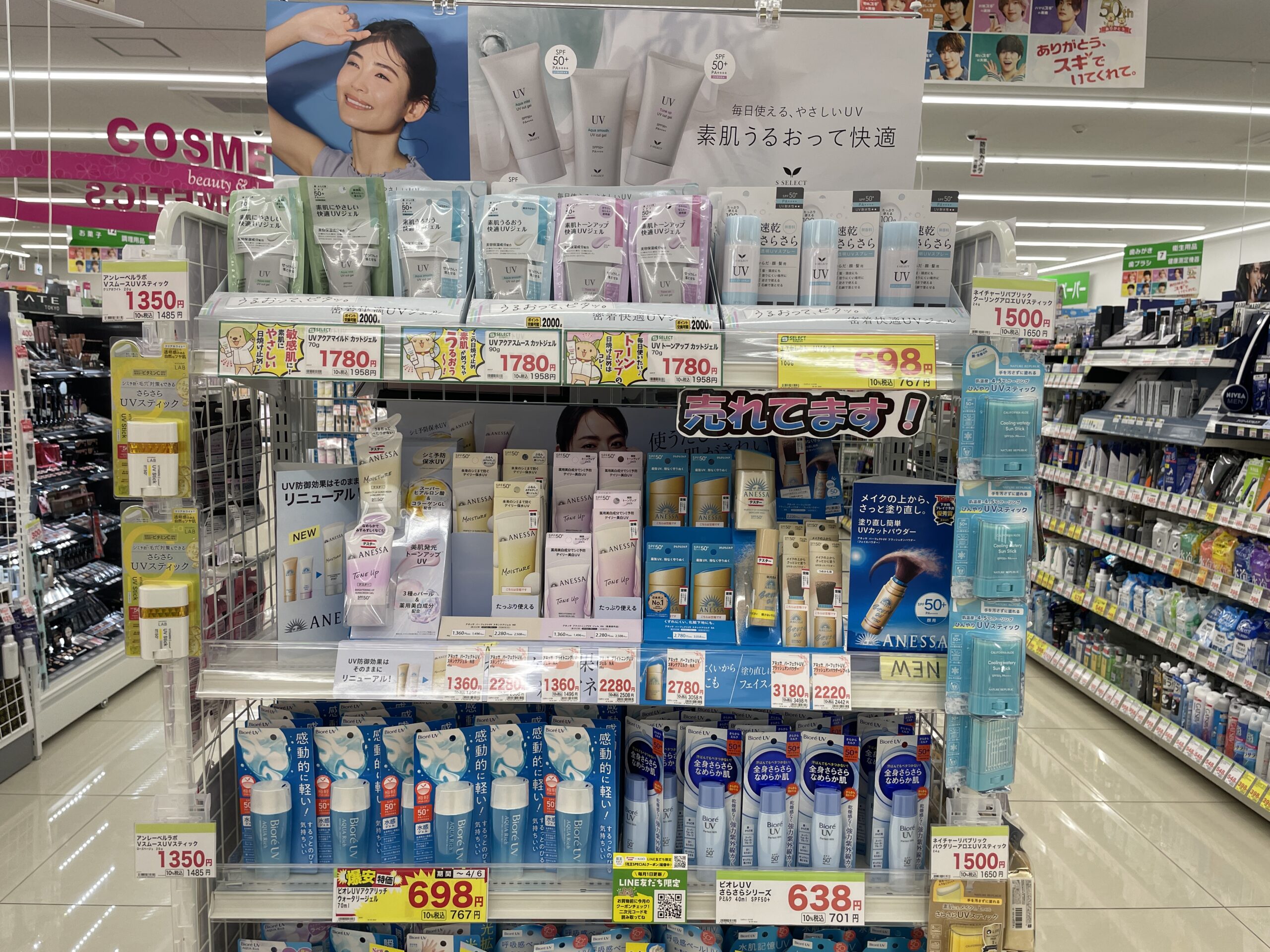
Top tourist and local picks:
- Anessa Perfect UV Sunscreen Skincare Milk (アネッサ パーフェクトUV) — The gold bottle. SPF50+ PA++++. Around ¥2,000–¥2,500. Stays on in sweat and water. Hugely popular.
- Biore UV Aqua Rich Watery Essence — SPF50+ PA++++. Around ¥800–¥1,000. Incredibly light, perfect under makeup. Probably the most-repurchased Japanese skincare product by tourists.
- Skin Aqua Tone Up UV Essence (スキンアクア トーンアップ) — SPF50+ PA++++. Around ¥800. Comes in a lavender tint that colour-corrects and brightens. Cult status.
Important note: in Japan, sunscreen is not a summer beach item. It’s daily skincare, worn by office workers on their morning commute, year-round. This is part of why Japanese sun protection technology is so advanced — there’s a much larger everyday market to develop for.
—
Eye Drops: The Cooling Sensation That Surprises Everyone
This section comes with a warning.
If you pick up Japanese eye drops and use them for the first time, you will experience a sensation that can only be described as: “Is this what it feels like to pour a mountain stream directly into your eyeball?”
Yes. That’s normal. That’s the point. That’s desired.
Japanese eye drops are famous for their menthol-heavy “cooling” sensation, which ranges from “refreshing breeze” to “my eyes are experiencing winter.” Locals use them throughout the day — after staring at screens, after a long commute, during allergy season.
Key brands and what to know:
- Rohto (ロート製薬) — The cooling eye drop brand. Their “Rohto Cool” line has different intensity levels from 0 to 40 (40 is… a lot). The packaging is colour-coded: blue = mild, dark blue/black = intense. Around ¥500–¥1,000.
- Sante FX Neo — Popular with people who want strong cooling without going full Rohto 40. Around ¥600–¥800.
- Rohto Vita 40α — Vitamin-infused, for tired eyes. The reddish packaging. Around ¥800–¥1,000.
Tourist tip: start with a mid-level if you’re new to Japanese eye drops. Going straight to the maximum cooling level on your first try is a right of passage, but not always a comfortable one.
—
Health Drinks and Supplements: Japan’s Quiet Wellness Culture
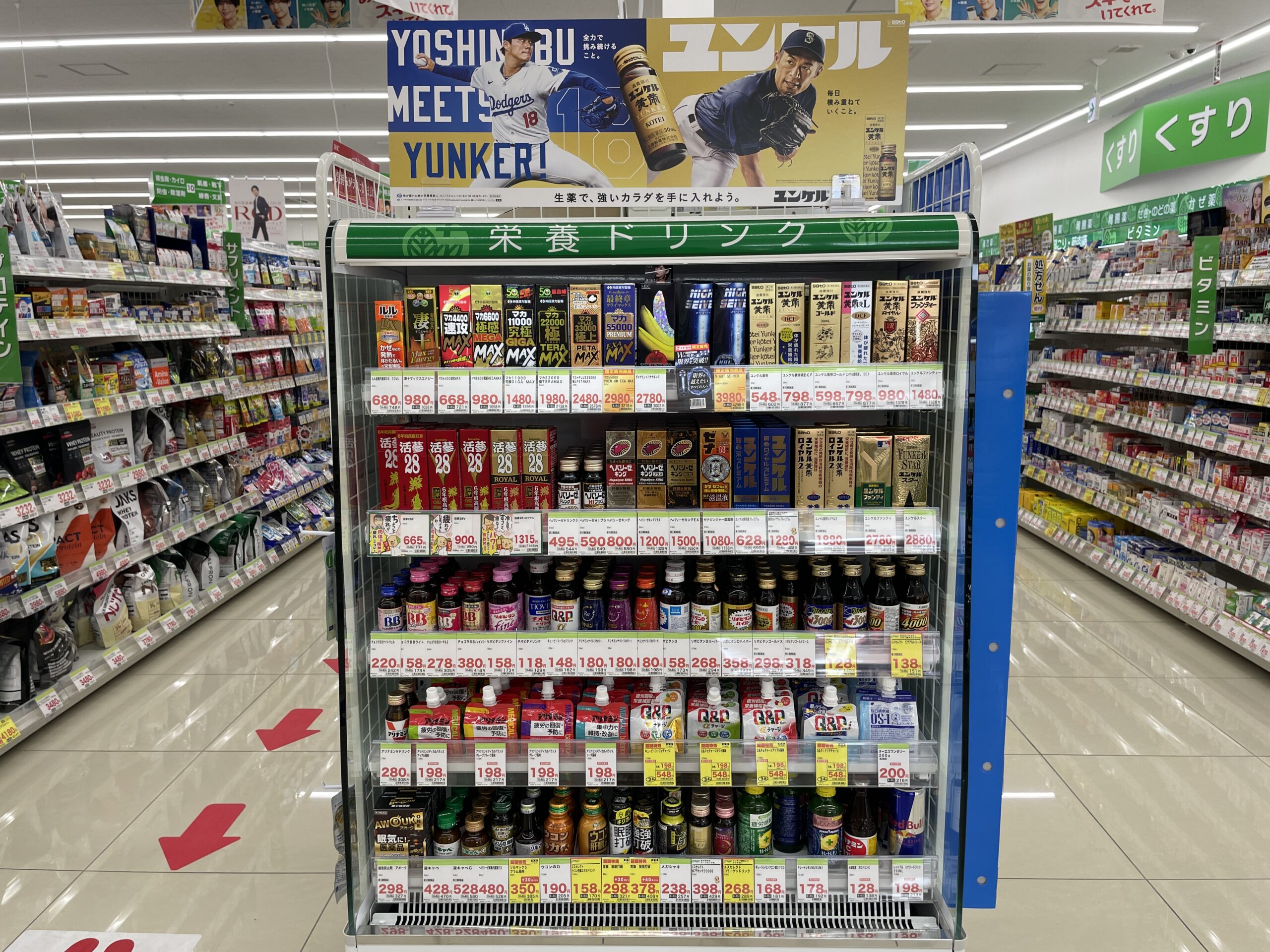
In Japan, picking up a small vitamin drink on the way to work is as unremarkable as picking up a coffee. Health culture here isn’t performative — it’s woven quietly into daily routine.
Health Drinks (栄養ドリンク)
- Lipovitan D (リポビタンD) — The classic. A small brown glass bottle with taurine, vitamins, and niacin. Around ¥150–¥200. The taste is medicinal and sweet. Salarimen have been drinking this since the 1960s.
- Yunker (ユンケル) — Higher-end fatigue recovery drink. Contains ginseng extract. Around ¥500–¥1,500 depending on the grade. Some versions are almost considered luxury gifts.
- Collagen drinks — Brands like Meiji Amino Collagen or Fancl make drinkable collagen supplements. Around ¥200–¥500 per serving. Very popular with women in their 30s–50s.
Supplements (サプリメント)
- DHC supplements — DHC is a massive Japanese supplement brand. Their basic vitamin C tablets (¥400 for 60 days’ worth) are a staple. Collagen, hyaluronic acid, biotin — all available and affordable.
- Fancl — Slightly more premium. Known for their additive-free philosophy. Good for sensitive stomachs.
A short cultural note: Japanese health culture tends toward “consistent daily small habits” rather than dramatic interventions. Taking a small collagen supplement every day for years is more culturally normal than a month-long detox. Drugstores are perfectly built for this mindset.
—
Common Tourist Mistakes at Japanese Drugstores
Hard-won knowledge, yours for free:
1. Getting paralysed by choice
There are sixteen types of Hada Labo lotion. There are cooling eye drops at twelve intensity levels. There are face washes for every skin type, season, and existential concern. This is overwhelming. Pick one recommended product, try it, don’t try to optimise everything in one trip.
2. Assuming “affordable” means “low quality”
It doesn’t. A ¥300 face soap from a Japanese drugstore is often genuinely superior to a ¥3,000 equivalent back home. Japanese mass-market skincare is exceptional by global standards. Don’t skip the cheap-looking stuff.
3. Not checking medicine restrictions at the border
Some Japanese medicines contain codeine or other regulated substances. Certain products sold freely in Japan are controlled or prohibited in other countries. Before you fill a bag with cold medicine, check your home country’s customs regulations. The Japan Customs website is a useful starting point.
4. Missing the pharmacist-only section
Japanese drugstores are carefully regulated. Some medicines (Category 1 drugs) require a licensed pharmacist to be present before you can purchase them. If you’re browsing and something is behind a counter or has a specific sign, that’s why. Don’t be surprised if you’re asked a few quick health questions before buying certain items — it’s regulation, not suspicion.
5. Forgetting about tax-free shopping
If you spend ¥5,000 or more on eligible goods (consumables like cosmetics have separate rules — ¥5,000 in consumables, consumed/sealed before leaving Japan), you can claim the consumption tax back (currently 10%). At a Matsukiyo or similar, this is done at a dedicated counter. Bring your passport every time you shop.
—
A Note on Locals vs. Tourists: Same Store, Different Universe
Stand in a Japanese drugstore for five minutes and you’ll see it clearly:
Locals come in with a mission. They walk fast, they grab their usual brand without breaking stride, they’re at the register before you’ve finished reading the front of the first package. They’re buying cold medicine, the same shampoo they always buy, or eye drops. Done in three minutes.
Tourists are on a treasure hunt. They’re crouching down to photograph price tags, holding up two nearly identical face washes side by side, translating packaging with their phones, and generally experiencing the particular joy of a store full of unfamiliar things that all look excellent.
Both groups are right. The local is efficient. The tourist is discovering something. What’s interesting is that the tourist often leaves with genuinely good products — Japanese mass-market cosmetics are globally respected — while the local goes home with functional necessities and never quite understands what all the fuss is about.
The fun is in the contrast.
—
Quick Reference: What to Buy and What to Pay
| Category | Recommended Product | Approx. Price | Who Buys It |
|---|---|---|---|
| Cold medicine | Pabron Gold A / Kakkonto | ¥800–¥1,500 | Locals |
| Energy drink | Lipovitan D / Yunker | ¥150–¥1,500 | Locals |
| Face wash | Biore Marshmallow Whip | ¥800–¥1,000 | Both |
| Toner | Hada Labo Gokujun Lotion | ¥800–¥1,000 | Tourists (mostly) |
| Sheet masks | Lululun / My Beauty Diary | ¥600–¥1,500 | Both |
| Sunscreen | Biore UV Aqua Rich / Anessa | ¥800–¥2,500 | Both |
| Eye drops | Rohto Cool / Sante FX Neo | ¥500–¥1,000 | Locals (tourists discover) |
| Supplements | DHC Vitamin C / Fancl | ¥400–¥1,500 | Both |
—
Final Thoughts: The Drugstore Is the Souvenir Shop
I’m going to be honest with you: Japanese drugstores are more interesting than a lot of actual tourist attractions. I say this as someone who lives here and still wanders into Matsukiyo with no plan and comes out twenty minutes later slightly confused about what happened to my afternoon.
The products are genuinely good. The prices are genuinely fair. And there’s something satisfying about buying things that real people in Japan actually use every day — not a keychain of Mt. Fuji, but the same face wash the woman in front of you in the queue has been buying for three years.
That’s a small but real piece of daily Japanese life. And it fits in your carry-on.
Go explore. Bring a basket. Try the eye drops. (Start with a mild one.)
Share your thoughts