
You’ve read the guides. You’ve watched the vlogs. You know about Mount Fuji, Kyoto’s temples, and the fact that the sushi is going to ruin all other sushi for you forever. But here’s what nobody warns you about: Japan will sneak up on you in ways you never expected.
Not with jaw-dropping monuments. Not with extreme sports or once-in-a-lifetime splurges. But with a hot towel. A tiny melody. A basket was quietly placed beside your chair without a word. These are the moments that hit you at 2 a.m. three weeks after you’ve returned home — when you’re standing in your kitchen, making mediocre coffee, and you suddenly think: Wait. That was… perfect.
Japan has a concept called omotenashi (おもてなし) — a whole-hearted hospitality that anticipates your needs before you even realize you have them. This isn’t a policy. It isn’t a script. It’s a philosophy baked so deeply into daily life that it shows up in the smallest, most ordinary places. And once you’ve experienced it, everything else feels like it’s just missing something.
So — how many of these quietly magical moments can you collect on your trip? Keep this as your unofficial checklist. No stamps required.
- 🧦 1. The Toilet Slipper Moment
- 🍵 2. The Mysterious Tray of Tea and Sweets
- 🏨 3. The Hotel Room That Read Your Mind
- 🍜 4. The Soup That Changed Someone’s Life
- 🥢 5. The Chopstick Rest You Could Take Home
- 🌡️ 6. The Oshibori Temperature is Not an Accident
- ☂️ 7. The Umbrella Lock (A Story About Trust)
- 👜 8. The Basket for Your Bag
- 🚕 9. The Taxi Door That Opens By Itself (Magic? Science? Both.)
- 🌧️ 10. The Rainy Day Shopping Bag Cover
- 🙇 11. The Shinkansen Bow (And Why It Goes Viral Every Time)
- 🎵 12. The Station Melody (Each One is Different. Each One is Wonderful.)
- 🍱 13. The Food Replica Window (Not Fake. Art.)
- 🍵 14. The Free Water That Arrives Before You Ask
- 🍙 15. The Onigiri That Opens in Three Perfect Steps
- 🤫 16. The Quietest Train Carriage You’ve Ever Been In
- 👛 17. The Wallet That Came Back (With Everything Inside)
- 🚌 18. The Queue That Actually Works
- ✨ The Checklist: How Many Did You Get?
🧦 1. The Toilet Slipper Moment

You’re staying at a traditional ryokan (Japanese inn). You shuffle toward the bathroom in your cozy room slippers — and then you notice it. Right outside the bathroom door, a pair of dedicated toilet slippers, waiting for you like a tiny, hygienic welcome committee.
This is not a coincidence. This is not “some guests do this.” This is standard. The bathroom gets its own slippers because, in Japan, cleanliness is layered, intentional, and frankly quite logical once you think about it. The awkward part? Forgetting to swap back. Nothing announces “foreigner” like waddling back to the dinner table in toilet slippers. Don’t be that person. (We’ve all been that person.)
🍵 2. The Mysterious Tray of Tea and Sweets
You check into your ryokan room. Before you’ve even worked out how the futon folds, there’s already a small lacquerware tray on the low table: a cup of matcha or roasted hojicha tea, and a delicate seasonal sweet (wagashi) chosen to reflect the time of year.
Nobody asked if you wanted it. Nobody charged you for it. It simply… appeared. This is the Japanese hospitality equivalent of a warm hug — quiet, graceful, and entirely unexpected. If you’re the type to travel for flavours and feelings rather than trophies and photographs, this moment might genuinely make your eyes water. (And that’s okay. The tea is very good.)
🏨 3. The Hotel Room That Read Your Mind
Western hotels give you a bed and a tiny soap shaped like a seashell. Japanese hotels — even mid-range business hotels — give you: a toothbrush, toothpaste, a razor, cotton swabs, a hairdryer, a yukata (casual cotton robe), sometimes pyjamas, a small comb, face towels, a bath towel, a hand towel, slippers, green tea bags, and occasionally a scale so you can check whether all that ramen is catching up with you.
You don’t need to pack a toiletries bag. You barely need to pack at all. One friend — a seasoned solo traveller — told me she once arrived in Tokyo with a carry-on so minimalist it raised eyebrows at check-in. “They just… have everything,” she shrugged. Reader, they do.
🍜 4. The Soup That Changed Someone’s Life
This one is personal. A friend of mine — let’s call her K — had her very first meal in Japan at a small noodle shop in Kyoto. She ordered ramen. She was slightly nervous, not sure what to expect. The bowl arrived: enormous, steaming, extraordinary. But what she remembers most, even now, isn’t the noodles. It’s the small side cup of clear, golden dashi broth that came with it, unrequested, unannounced.
Dashi — made from kombu seaweed and dried bonito flakes — is one of the foundational flavours of Japanese cuisine. Delicate, savoury, profound. K took one sip and went completely silent. “That,” she said eventually, “is the best thing I have ever tasted in my life.” She has returned to Japan four times since. The dashi was probably partly responsible.
🥢 5. The Chopstick Rest You Could Take Home
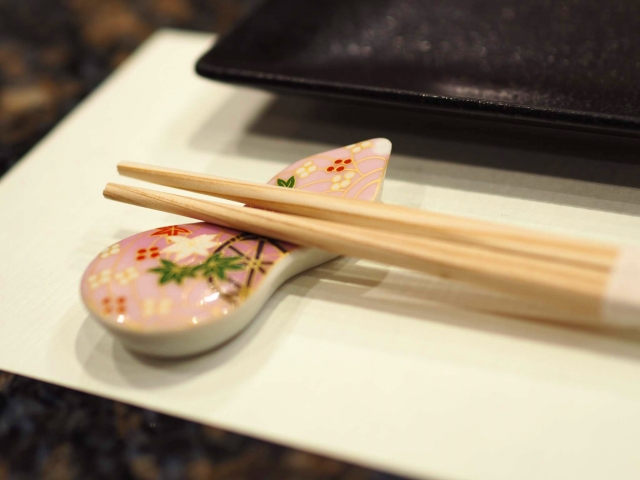
At the end of a wonderful meal, you look down and notice your chopstick rest (hashioki) — a tiny ceramic piece, perhaps shaped like a leaf, a fish, or a piece of origami. You’ve been resting your chopsticks on this small work of art throughout dinner without fully appreciating it.
Then the staff smiles and says: Omochi kudasai — “Please, take it with you.” It’s a gift. A tiny, impractical, utterly charming souvenir that costs the restaurant almost nothing and gives you something to display on your shelf forever. Not every restaurant does this — but enough do that it’s worth looking hopeful as you pay the bill.
🌡️ 6. The Oshibori Temperature is Not an Accident
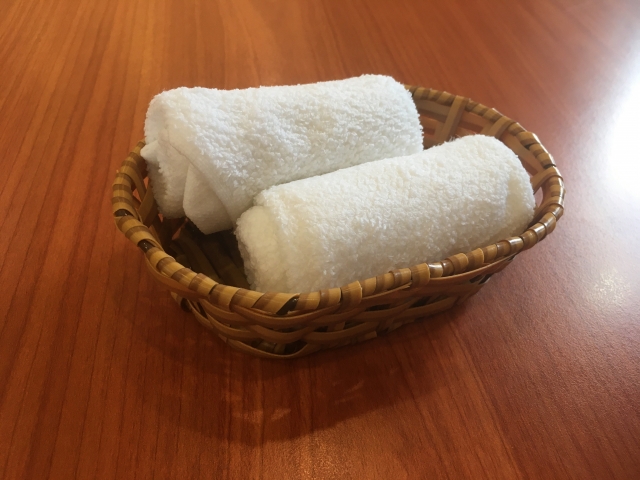
You sit down at a restaurant. Within moments, you’re handed a small rolled towel — an oshibori — to wipe your hands. In summer: ice-cold, fresh from the refrigerator, a tiny mercy in the heat. In winter: steaming hot, the kind of warmth that travels from your hands to your entire soul.
Nobody announced this. There was no “seasonal oshibori upgrade” on the menu. This is simply what’s done, every day, at restaurants across Japan, year-round, because it never occurred to anyone not to. The fact that this level of quiet, climate-aware attentiveness is utterly routine here is the kind of detail that makes people book return flights.
☂️ 7. The Umbrella Lock (A Story About Trust)
Japan gets a lot of rain. Japan also has a lot of umbrellas. You’ll notice that many shops, restaurants, and public buildings have umbrella stands at the entrance — completely normal. But here’s the detail: many of these umbrella stands come with individual locks and a little key, so your umbrella doesn’t walk away while you’re eating your udon.
Think about that for a second. A whole system was designed — and widely implemented — not because people are inherently dishonest, but because even in one of the world’s safest countries, someone decided: let’s just make sure. The existence of the lock is proof of the standard. The fact that you need the key back says something rather lovely about expectations in Japan.
👜 8. The Basket for Your Bag
You sit down at a café or restaurant. You have a bag — a tote, a backpack, a handbag. Before you’ve even thought about where to put it, a staff member appears with a small wicker basket and places it silently beside your chair, wordlessly communicating: your bag doesn’t belong on the floor. Here, it has a home.
This moment is so small. It takes about three seconds. And yet it will stay with you for years, because it encapsulates something difficult to explain about Japanese hospitality: the problem was solved before you knew you had it.
🚕 9. The Taxi Door That Opens By Itself (Magic? Science? Both.)
You approach a Japanese taxi. You reach for the door handle. The door swings open — on its own — before your hand even makes contact. You freeze. You look around. You slowly get in, deeply unsure about what just happened.
Welcome to the automatic taxi door, one of Japan’s most reliable sources of first-timer bewilderment. The driver operates the rear passenger door remotely — you don’t touch it to get in, and you don’t touch it to get out. It closes itself behind you with a satisfying click. Several visitors have been observed standing outside an open taxi door, waiting politely for permission to enter. The driver is also waiting. Everyone is very patient.
🌧️ 10. The Rainy Day Shopping Bag Cover
You’ve just bought something — a book, a souvenir, a gift. You step out of the shop and it’s raining. But wait: your shopping bag has a slim plastic sleeve pulled over it, like a raincoat for your purchase. The staff did this automatically, without being asked, without making a show of it, because obviously your paper bag shouldn’t get wet.
This tiny act of foresight — the seeing ahead of a problem and solving it invisibly — is one of the most distinctly Japanese things you will experience. It costs nothing. It takes five seconds. And it will make you feel, for a moment, genuinely cared for by a stranger.
🙇 11. The Shinkansen Bow (And Why It Goes Viral Every Time)
Your bullet train pulls out of the station. You look out the window. The cleaning crew — who just transformed the carriage from used to immaculate in seven minutes flat — is lined up on the platform, bowing deeply as the train departs.
This image has been shared millions of times on social media, and it still makes people stop scrolling. It’s not a performance for tourists. It’s the Shinkansen cleaning team’s standard sendoff, every time, every train, regardless of who’s watching. These are professionals who take pride in work that most people never think about. The bow is a statement: we did this well, and we know it.
If you want to see the full routine, look up the Tessei cleaning team — the official name for JR East’s famous 7-minute turnaround crews. Their work has been studied by businesses and researchers worldwide as a model of efficiency and workplace pride.
🎵 12. The Station Melody (Each One is Different. Each One is Wonderful.)
Japanese train stations don’t just play a generic beep when a train is about to leave. Many stations have their own unique hassha merodii (departure melody) — a short, specially composed or curated tune that plays as the doors close. Some melodies feature songs connected to local landmarks, works by local composers, or themes linked to the area’s history or character.
The melodies were first introduced in 1989 at Shinjuku and Shibuya stations, partly as a way to calm passengers and reduce the frantic rushing that harsh buzzers had encouraged. Today, JR East alone uses over 400 confirmed melodies across its network. Some stations play folk songs. Some play local pop classics. Kawasaki Station plays a version of “Sukiyaki” — the famous Japanese song that topped the US charts in the 1960s — in honour of its connection to singer Sakamoto Kyū, who was born there.
You might hear your first departure melody and think: that was charming. By your fifth station, you’ll be identifying them. By day three, you’ll be sad when a station just plays a standard tone. This is how Japan trains you to notice beauty in transit.
👉 Read more about the history of station melodies: Nippon.com — Japan’s Fascination with Train Station Melodies
🍱 13. The Food Replica Window (Not Fake. Art.)
You’re walking down a street in Tokyo. You peer into a restaurant window and see what looks like a perfect bowl of ramen — glistening broth, spiralled noodles, a soft egg halved with surgical precision, a curl of nori. You reach out instinctively. It’s plastic.
These are shokuhin sampuru (食品サンプル) — Japan’s famous food replica displays, crafted by skilled artisans using silicone molds, liquid-coloured resin, and intricate airbrushing to replicate not just the appearance but the sensory memory of food. Each replica is custom-made for the restaurant and can cost ten to twenty times the price of the actual dish it represents. This is not cheap décor. This is craft.
The practical magic here: you never need to guess what you’re ordering. You can point. You can compare sizes. You can identify ingredients. In a country where menus might be entirely in Japanese, this window is your menu — accurate, three-dimensional, and occasionally better-looking than the real thing (though the real thing is also excellent).
👉 If you want to make your own: Japan National Tourism Organization — Make Your Own Replica Food
🍵 14. The Free Water That Arrives Before You Ask
You sit down at a restaurant. Without a word, a glass of cold water — or a small pot of warm green tea — arrives at your table. You didn’t ask. There’s no charge. This is simply what happens.
If you’ve travelled in parts of Europe, North America, or Southeast Asia where water is ordered and paid for like any other drink, this will feel like a small revelation. In Japan, hydration is considered a basic courtesy extended to every guest, automatically. Some restaurants bring cold mugicha (barley tea). Some bring iced water year-round. Some switch to warm tea in winter. Whatever it is: it’s free, it’s refillable, and nobody makes a thing of it.
🍙 15. The Onigiri That Opens in Three Perfect Steps
You grab an onigiri (rice ball) from a convenience store — a 7-Eleven, a Lawson, a FamilyMart. You notice that the packaging has numbered tabs: 1, 2, 3. You follow the instructions. The plastic film peels away in a specific sequence, keeping the crispy nori seaweed separated from the rice until the exact moment you eat it, so it stays perfectly crunchy.
This packaging was not an accident. Someone spent considerable time engineering the ideal onigiri-eating experience. The nori problem was identified. The solution was designed, tested, and implemented on a product that costs about 150 yen. This is Japan in miniature: no problem too small to solve beautifully.
🤫 16. The Quietest Train Carriage You’ve Ever Been In
You board a Tokyo metro train during rush hour. The carriage is packed — shoulder to shoulder, briefcase to backpack. And yet: almost complete silence. No loud phone calls. No music leaking from headphones. No FaceTime conversations. People read, scroll, doze, stare into the middle distance. A baby cries briefly, and the parents look genuinely distressed by the disruption.
There’s no official law against talking on Japanese trains (though some signs ask you to put your phone on silent). This is almost entirely a social norm — the collective agreement that shared public space is shared, and that strangers didn’t sign up to hear your conversation. Once you’ve experienced a silent rush-hour commute, other cities’ train journeys will feel like riding through a construction site.
👛 17. The Wallet That Came Back (With Everything Inside)
This one sounds like a myth until it happens to you or someone you know. You leave your wallet at a café. You return an hour later, slightly panicked. The staff has kept it safely behind the counter. Everything — cash, cards, receipts, that loyalty stamp card you’ve been carefully collecting — is exactly as you left it.
This is not luck. In Tokyo in 2018, 83% of lost mobile phones and 65% of lost wallets were successfully returned to their owners. In 2023, a record 29.79 million lost items were reported to police nationwide, with found cash reaching an all-time high of 22.85 billion yen — and the majority of it was returned to owners.
The system works because the culture around it works. Children in Japan are taught from a young age to hand in found items. Koban (small neighbourhood police boxes) are everywhere, approachable, and genuinely helpful. Japan has even implemented an AI-powered lost item matching system used by around 30 organisations — including major Tokyo train lines and Haneda Airport — which has logged over a million items since launching in 2023.
👉 If you do lose something: Japan National Police Agency — Lost Property (English Guide)
🚌 18. The Queue That Actually Works
You wait for a bus. Or you wait outside a popular ramen restaurant. And you notice something almost surreal: the line is perfect. Not approximately a line. Not a loose cluster of people gradually inching forward. A line — orderly, maintained, self-policing, with everyone aware of their position and completely at peace with it.
Nobody cuts in. Nobody sighs aggressively at the person in front. Nobody does that thing where they gradually drift to the side to create a parallel, unofficial second queue. The line just… works. And you realize, standing there, that you have never fully trusted a line before. Japan has given you that trust. It’s an unexpected gift.
✨ The Checklist: How Many Did You Get?
Here’s the thing about these moments: they’re not tourist attractions. You can’t book them. You can’t rush to see them. They just happen — quietly, reliably, as part of the daily rhythm of a country that has decided, collectively, that doing things properly is worth the effort.
This is what people mean when they talk about Japan staying with you. Not the landmarks — those you can photograph. It’s the temperature of the oshibori in winter. The sound of that station melody right before the doors close. The basket that appeared beside your chair before you’d even noticed you needed one.
These aren’t luxuries. In Japan, they’re just Tuesday.
So — how many magical moments did you collect? And which one surprised you the most? Leave a comment below — I’d genuinely love to know.
Planning your trip to Japan? The Japan National Tourism Organization (JNTO) has excellent official resources for first-time visitors, including regional guides, seasonal travel tips, and practical information in multiple languages.


Share your thoughts