
By someone who has eaten way too much toast before 11am and has absolutely no regrets
Imagine walking into a café, ordering a cup of coffee, and then — without saying another word, without handing over extra cash, without even fully understanding what just happened — food starts appearing at your table.
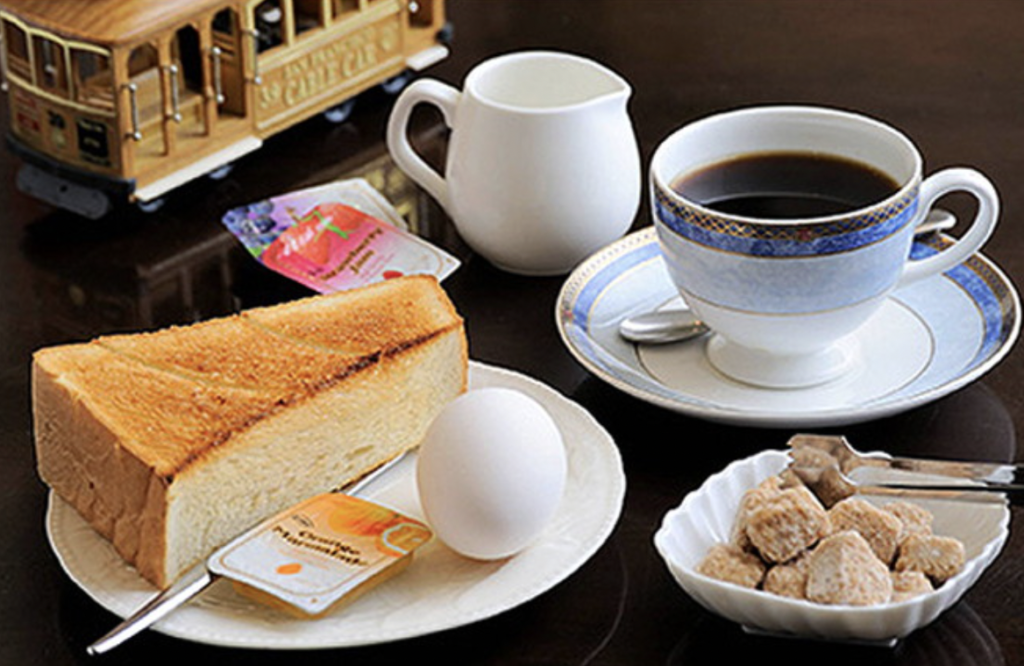
Toast. A boiled egg. Maybe jam. Maybe a small salad. Maybe, if you’ve chosen wisely, a warm bread roll the size of a small planet.
You didn’t order it. You didn’t pay for it. It just… arrived.
Welcome to Japan’s Morning Service (モーニングサービス) — one of the most quietly brilliant breakfast traditions on earth, and one that approximately zero guidebooks give the attention it deserves.
What Even Is Morning Service?
Morning Service is exactly what it sounds like: a Japanese café tradition where ordering any drink during morning hours automatically gets you free food. Not a tiny complimentary biscuit. Not a single sad cracker. Actual food — toast, eggs, sometimes salad, sometimes jam, sometimes all of the above.
The catch? There isn’t one. You just have to be there before 11am.
The logic, from the café’s perspective, is elegant: mornings are slow. Getting people through the door requires incentive. And once you’re sitting in a warm booth with a hot coffee and a plate of buttered toast, you tend to stay a while, order a second drink, and maybe come back tomorrow. It’s hospitality as business strategy, and it has been working since the 1950s.
From your perspective as a visitor: it’s basically a free breakfast. Please enjoy it without overthinking it.
The Holy Land: Nagoya
If Morning Service is a religion, Nagoya is Mecca — and the locals take it very seriously.
The tradition is widely believed to have started here in the 1950s, when café owners began offering small snacks alongside morning drinks to lure in customers. What followed was decades of friendly one-upmanship, with cafés trying to out-generous each other until “free snack with coffee” became “free feast with coffee.” Today, Nagoya’s Morning Service culture is so deeply embedded in daily life that visitors sometimes assume the food is a mistake and try to pay for it separately. (It is not a mistake. Please don’t try to pay for it separately.)
Ogura Toast: Nagoya’s Edible Identity
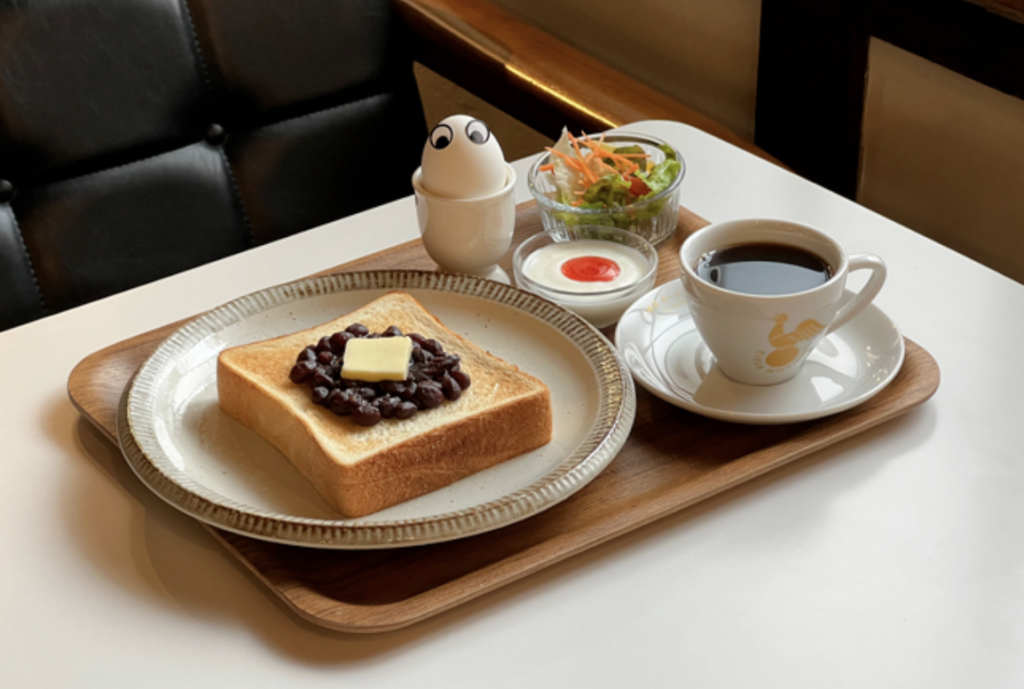
The dish you absolutely must encounter is ogura toast (小倉トースト): thick, pillowy toast spread with butter and anko — sweet red bean paste.
Before you make that face: trust the process.
The combination of salty butter and sweet, earthy bean paste is one of those flavour pairings that sounds like a dare but tastes like a revelation. It’s the kind of thing that makes you stare at the ceiling for a moment and quietly reconsider everything you thought you knew about breakfast. Nagoya residents eat it with the casual confidence of people who have known this secret for seventy years and feel no need to apologise for it.
If you’re visiting Nagoya, ogura toast at morning service is non-negotiable. It is, in the most literal sense, the toast of the town.
Komeda Coffee: The Morning Service Gateway Drug
If you’re new to Japan and want to experience Morning Service without the guesswork, your first stop should be Komeda Coffee (コメダ珈琲店).
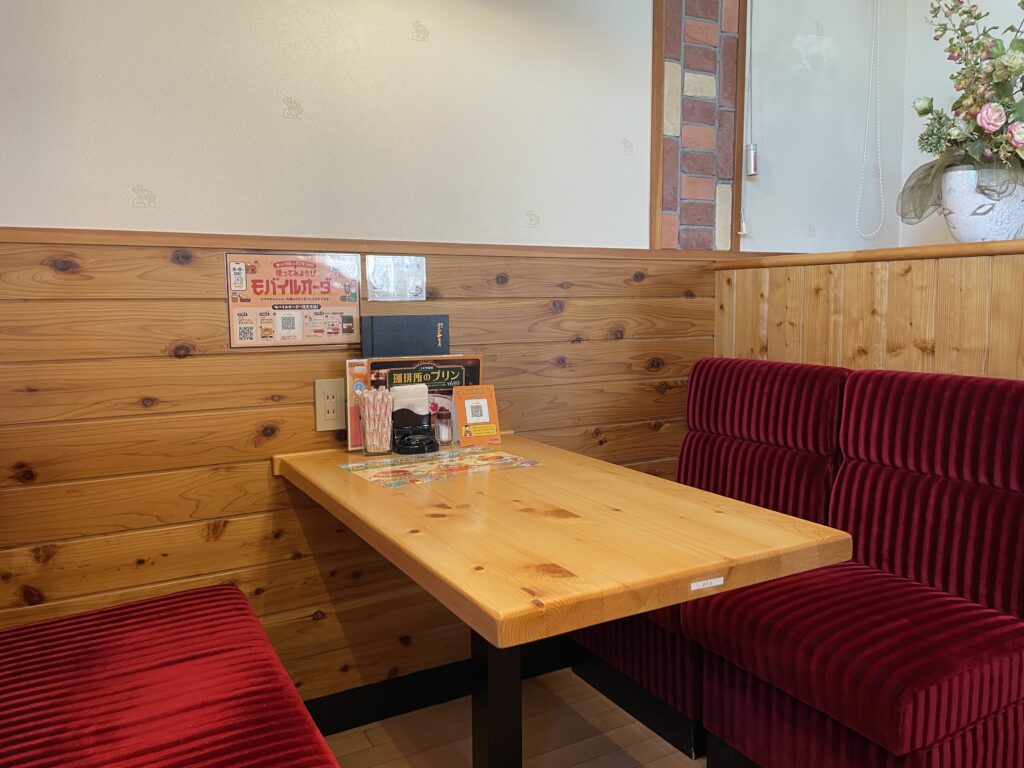
Komeda is a beloved Japanese coffee chain — think of it as the philosophical opposite of Starbucks. Where Starbucks is all bar stools and laptop energy and a queue that makes you feel vaguely stressed, Komeda is deep cushioned booths, wooden partitions, warm lighting, and the general atmosphere of somewhere that has been quietly minding its own business since 1968. Sitting in a Komeda booth feels like being gently held by a café that genuinely wants you to relax.
It is, in the best possible way, extremely comfortable.
The Morning Menu: What You Actually Get
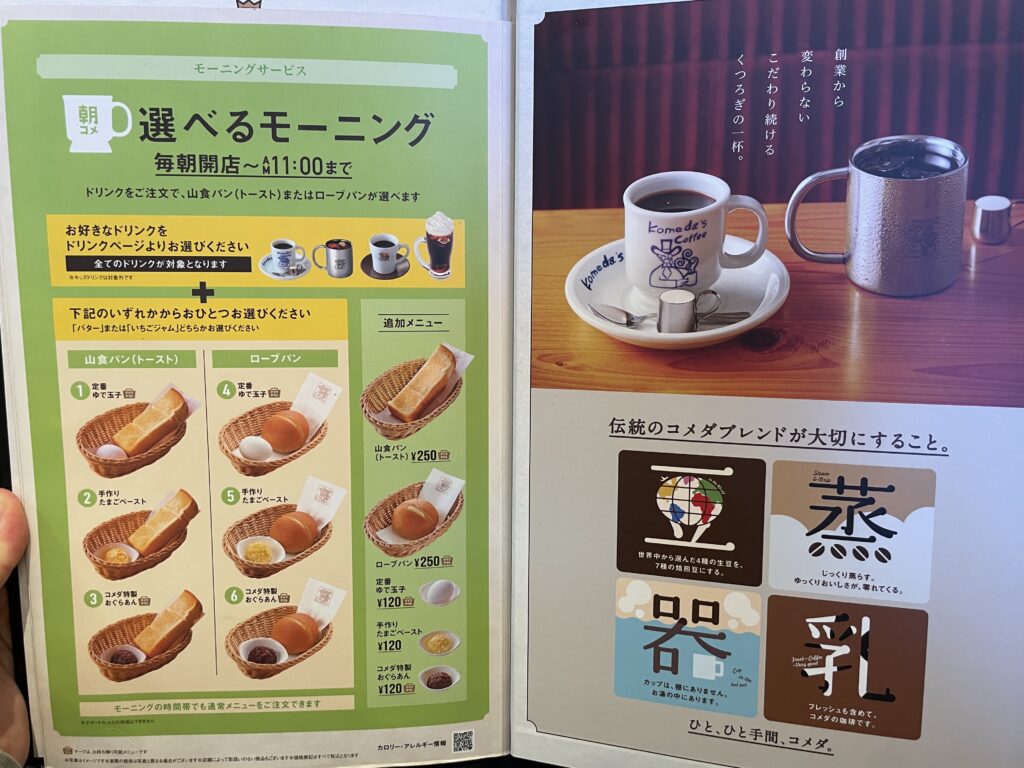
Here’s where things get interesting. When you sit down, your server will hand you a menu. Order any drink — coffee, tea, café au lait, whatever calls to you. Then look for the morning set options.
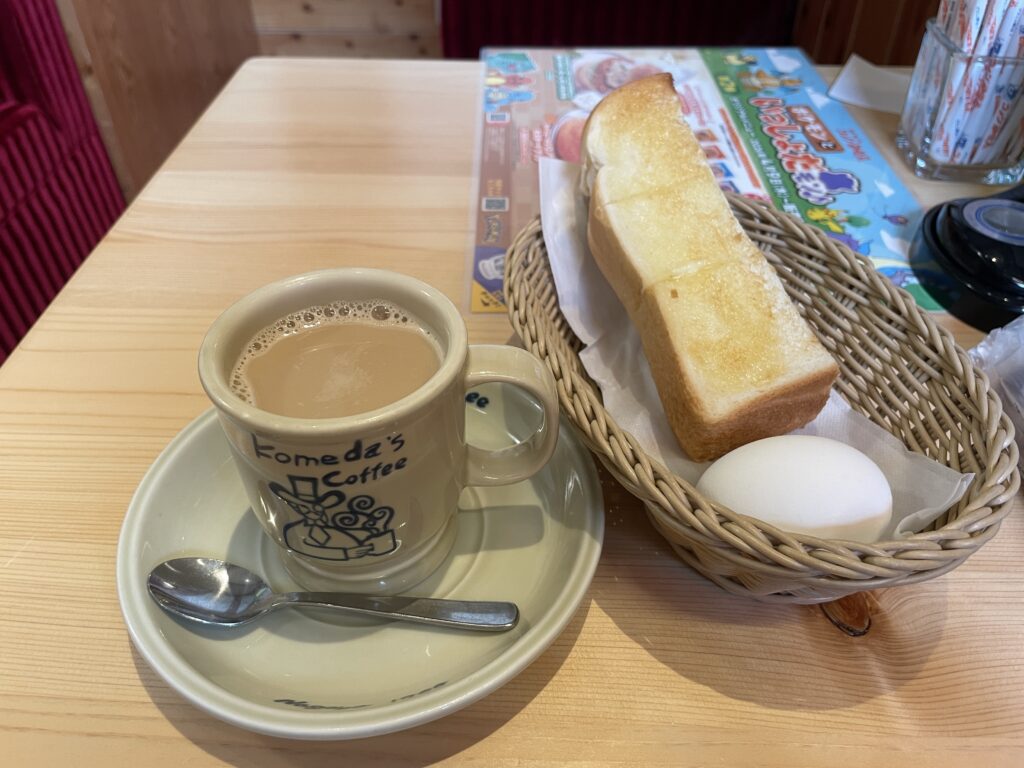
Bread choices (this is where your first important decision lies):
- Thick-cut white toast (厚切り食パン) — This is the classic. Dense, fluffy, genuinely thick. One important note: you will receive half a slice. Before you feel shortchanged, understand that “half a slice” at Komeda is roughly the size of a children’s picture book. You will be fine.
- Rogue bread / roll (ロールパン or ローグパン depending on location) — A soft, pillowy bread roll, warm and slightly sweet, with a gentle pull-apart texture. Excellent for dunking in coffee if you’re feeling adventurous.
Toppings (you’ll be asked to choose):
- Butter — Classic, melty, perfect.
- Jam — Usually strawberry, applied generously.
- Ogura paste (red bean) — The Nagoya special. Say yes.
- Some locations offer butter + ogura as a combination, which is the correct answer.
Also included, automatically:
- A boiled egg — warm, perfectly cooked, sitting there like a dependable friend.
- At many locations, a small portion of salad or side.
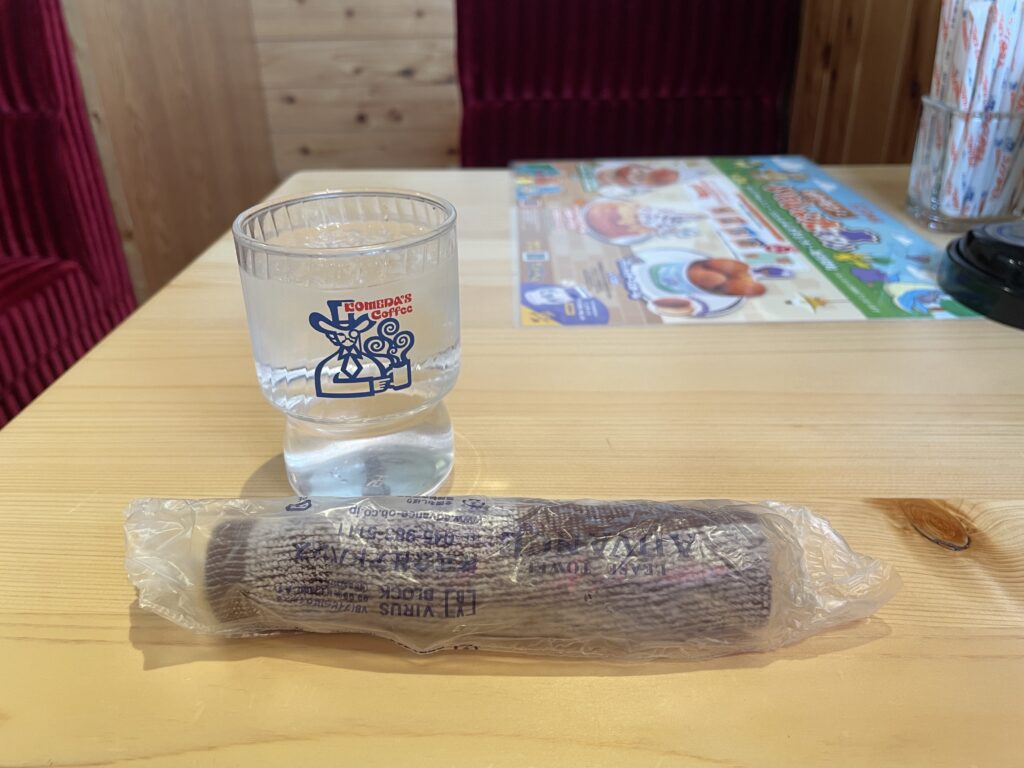
The oshibori — a hot, damp towel — arrives before your food, because Komeda understands that you just came in from outside and deserve to feel like a person. This small act of hospitality, which costs them almost nothing, will make you feel disproportionately looked after. That’s the Komeda effect.
How to Navigate the Table
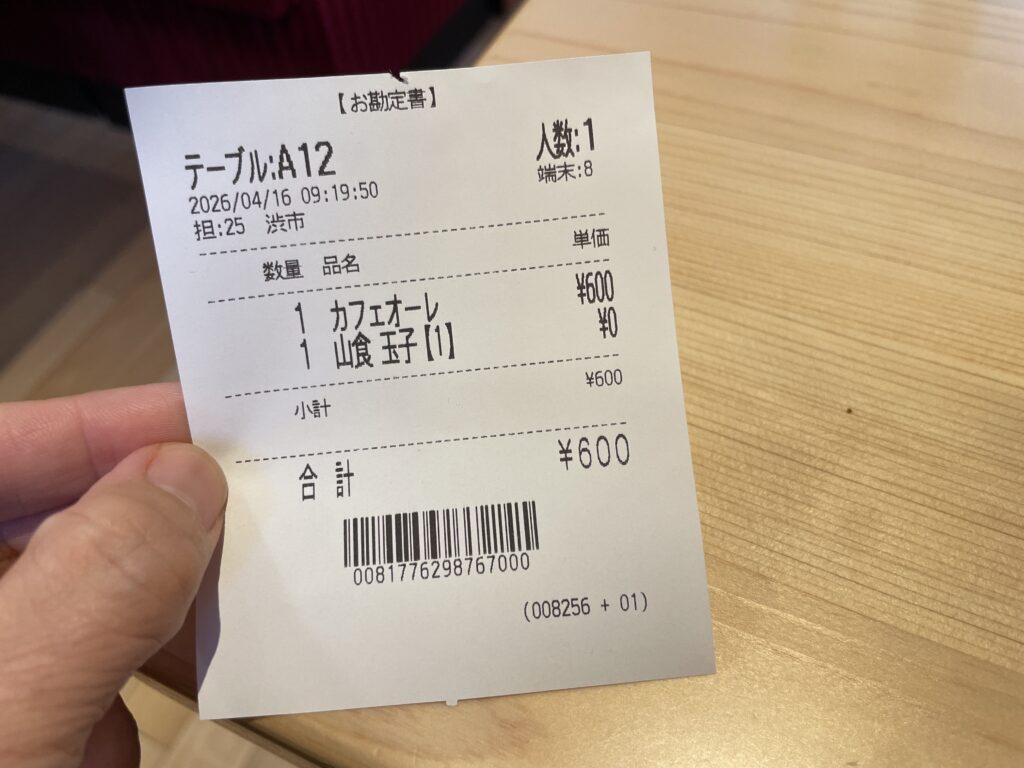
When your food arrives, a small receipt will be placed quietly on your table. This is not a bill arriving suspiciously early — it’s just how Japanese cafés track your order. When you’re ready to leave, take it to the register near the door and pay there.
Photo menus are available at all Komeda locations, so if your Japanese is limited to arigatou gozaimasu and the names of three ramen toppings, you can simply point at what looks good. No one will mind.
Practical Komeda Info
| Detail | Info |
|---|---|
| Morning hours | Until 11:00am — do not sleep in |
| Cost | Price of your drink only |
| Ordering | Point at the photo menu |
| Payment | At the register when you leave |
| Finding one | Locations across Japan including major Tokyo areas |
Beyond Morning Hours: The Regular Menu
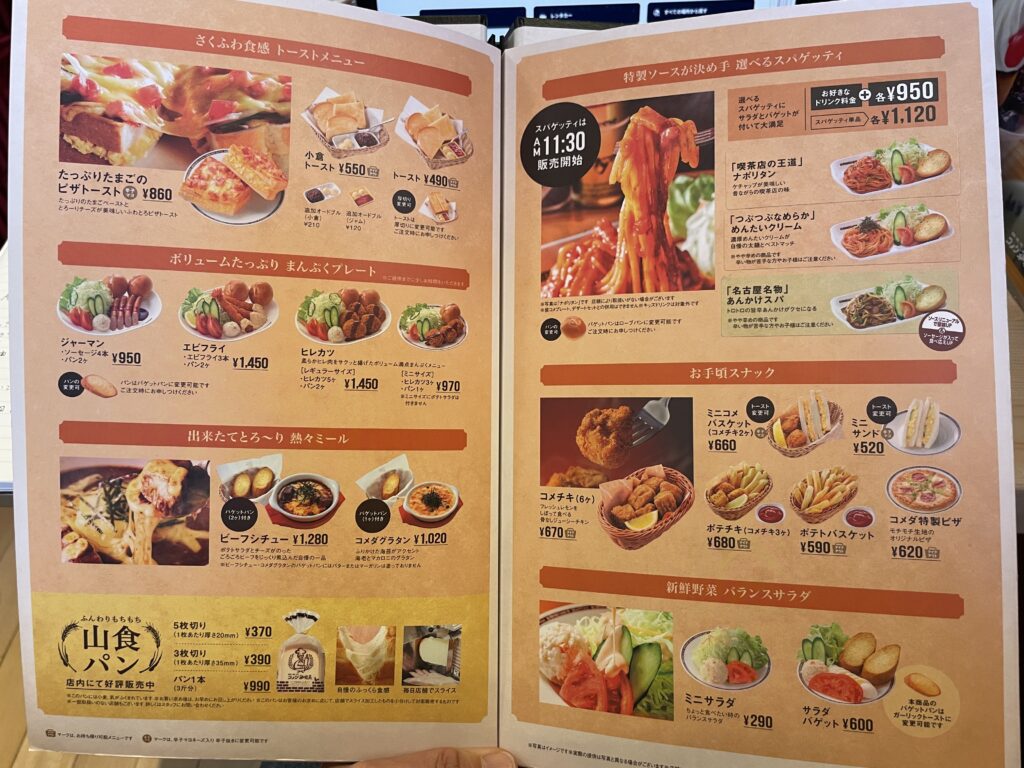
Komeda’s regular menu — available all day — is also worth knowing about. Their sandwiches are engineered with the structural ambition of a small building; a “half” sandwich is large enough that ordering a whole one is a commitment you should discuss with someone who knows you well.
Their Shiro Noir (シロノワール) — a warm Danish pastry topped with soft-serve ice cream — is a thing of genuine beauty and should be treated as such.
But during morning hours? A simple drink gets you all of this for the price of a coffee.
This is not a drill.
In Tokyo: Where to Find It (And the Weird, Wonderful Alternatives)
Tokyo is not Nagoya. Morning Service culture is quieter here, less theatrical, slightly harder to stumble upon by accident. But it absolutely exists — and once you know where to look, you’ll find it on street corners you’ve already walked past twice.
Option 1: Komeda in Tokyo
Komeda has a strong presence in the capital, with locations in Shinjuku, Shibuya, Ginza, Koenji, and beyond. If you want the full, reliable Morning Service experience with the booth and the oshibori and the half-a-loaf toast, Komeda Tokyo is your friend. Find the nearest location the night before, note the opening time, and make a plan.
Option 2: Kissaten (喫茶店) — The Old Guard
For something with more texture and local atmosphere, seek out a kissaten — a traditional Japanese coffee shop, often family-run, often decorated in a style that hasn’t changed since approximately 1979, and absolutely magnificent for it.
Kissaten culture is one of Japan’s great unsung pleasures. These are places with jazz playing softly from a speaker that predates your parents, with a counter where the owner makes coffee with the focused precision of someone who has never once used a pod machine and never intends to. Many kissaten offer their own version of Morning Service: simpler than Komeda’s, quieter, but served with the brisk, no-fuss efficiency of a place that has been doing this since before you were born.
Finding a good kissaten requires wandering — which is, frankly, one of the better ways to spend a Tokyo morning.
Option 3: Tokyo’s Quirky Morning Scene — For the Adventurous
Tokyo being Tokyo, “breakfast” does not stop at toast and eggs. If you want something a little further off the beaten path, the city obliges.
Ochazuke Morning Sets
Some traditional Japanese restaurants open early and serve ochazuke (green tea poured over rice with various toppings like pickled plum, salmon, or seaweed) as a morning option. It is warming, savoury, and about as far from a croissant as it’s possible to get without leaving the planet. Deeply recommended for anyone who wants to feel like they’re actually eating what Tokyo residents eat.
Try it here: Dashi Chazuke En — Lumine Shinjuku (Lumine Shinjuku 1, B2F) is an ochazuke specialist that takes the humble rice-and-broth dish seriously. Around ten varieties are on offer at any given time — including seafood options — and the dashi broth is free-flowing and refillable. Rice comes in small, medium, or large. Opens at 8am, which is genuinely useful.
Onigiri Specialty Shops
A small but growing genre of café-adjacent shops that open early and serve freshly made rice balls alongside miso soup and pickles. The fillings rotate and the quality is extraordinary. Bongo in Otsuka is a legendary example, with a queue that forms before it opens and a reputation that has outlasted decades.
Try it here: Katsuoto Bonta, tucked on the second floor of Shibuya Stream, is a counter-only spot that opens at 8am and makes onigiri on a scale that suggests they have not fully accepted that rice balls are meant to be small. The portions are generous to the point of being alarming in the best way. Takeaway is popular; eat-in is an experience.
Tofu Breakfast
Several establishments near temples or in older neighbourhoods serve silken tofu with accompaniments as a morning meal. Understated, delicate, and the kind of thing that makes you feel inexplicably virtuous for the rest of the day.
Try it here: Tsukiji Honganji Café Tsumugi, set within the grounds of the Tsukiji Honganji temple, serves a morning meal of eighteen dishes — a lineup that includes tofu with yuzu ankake sauce and other shojin-inspired (Buddhist vegetarian) preparations. It is healthy, refined, and entirely unlike anything you will find in a hotel buffet. Open daily from 8am. The Japanese afternoon tea, should you come back later, is also worth knowing about.
How to Do Morning Service: The Complete, Extremely Simple Guide
The beauty of this tradition is that it requires almost no effort on your part. Here is the entire process:
- Arrive before 11am. This is the only rule that matters. Morning Service waits for no one, and no amount of charm will convince a Komeda staff member to bend it.
- Sit down. Someone will bring you a menu.
- Order a drink. Coffee, tea, juice — any drink qualifies.
- Choose your morning set options from the photo menu. Point if necessary. Pointing is fine.
- Receive your oshibori (hot towel). Use it. Feel like a civilised human.
- Receive your breakfast. Eat it. Appreciate that this cost you nothing beyond the drink.
- When ready to leave, take the small receipt from your table to the register.
- Go about your day feeling inexplicably pleased with yourself.
That is genuinely it.
Why This Matters (Or: The Quietly Genius Part)
Morning Service is not going to appear on most “Top 10 Japan Experiences” lists. It won’t be in the glossy travel spread between the photos of Mount Fuji and the bullet train.
But here’s what it actually is: a window into how Japan thinks about hospitality. There’s a concept in Japanese service culture called omotenashi — a kind of wholehearted, anticipatory hospitality that doesn’t expect anything back. Morning Service is, in a small and delicious way, that concept made edible. No one is asking you to be grateful. No one is expecting a bigger tip (tipping isn’t a thing in Japan anyway). The food just appears because you came, and the café is glad you did.
Sitting in a Komeda booth at 9am, holding an oversized coffee mug, watching steam rise off a plate of toast you didn’t technically pay for, listening to the low hum of the morning around you — that’s a memory that sticks. Not because it’s spectacular, but because it’s kind.
Japan is generous like that.
The Quick-Reference Card
| Question | Answer |
|---|---|
| What is Morning Service? | Free food with any drink order at participating cafés |
| When does it end? | 11:00am — no exceptions |
| Best chain for beginners? | Komeda Coffee (コメダ珈琲店) |
| What bread can I choose? | Thick-cut toast or soft roll |
| What goes on the bread? | Butter, jam, or ogura (red bean) paste |
| What else comes with it? | Boiled egg, sometimes salad |
| Is Nagoya better for this? | Yes, but Tokyo has good options too |
| Do I need Japanese? | No — photo menus everywhere, pointing is acceptable |
| How do I pay? | Take receipt to the register when you leave |
Go before 11. Point at the menu. Enjoy your free breakfast. You haven’t done anything to deserve it — but Japan is generous like that, and it would be rude not to accept.


Share your thoughts