Japan isn’t just where Demon Slayer was created — it’s where you can actually step inside it.
So you’ve watched Demon Slayer: Kimetsu no Yaiba and now you can’t stop thinking about it. The breathing techniques, the incredible animation, Zenitsu screaming — we get it. But here’s the thing: Japan is basically one giant Demon Slayer set, and you can actually visit the places that inspired the story.
Whether you’re a die-hard fan who’s read every chapter of the manga or someone who just finished the anime and is now emotionally destroyed by the Mugen Train arc, this guide has you covered. Let’s explore the real-life locations that bring the world of Tanjiro and friends to life — plus where to stock up on all the merch your suitcase can hold.
- 🔥 What Is Demon Slayer, and Why Is Everyone Obsessed?
- ⛩️ Demon Slayer Pilgrimage: Real Locations to Visit
- 🛒 Where to Buy Demon Slayer Merchandise in Japan
- 📋 Quick Reference: Practical Tips Before You Go
- 🎌 1-Day Demon Slayer Plan: Tokyo Edition
- 💴 Budget Guide: How Much Does a Demon Slayer Day in Japan Actually Cost?
- 🗾 Final Thoughts: Why Demon Slayer Belongs in Japan
🔥 What Is Demon Slayer, and Why Is Everyone Obsessed?
For the one person reading this who somehow hasn’t heard of it: Demon Slayer (Kimetsu no Yaiba) is a manga series by Koyoharu Gotouge that ran from 2016 to 2020, and the anime adaptation took the world by storm. The story follows Tanjiro Kamado, a kind-hearted boy whose family is slaughtered by demons — all except his sister Nezuko, who is turned into a demon herself. Tanjiro joins the Demon Slayer Corps to find a cure for Nezuko and face the ultimate villain, Muzan Kibutsuji.
The anime is stunning. Like, jaw-droppingly beautiful. Studio ufotable went absolutely wild with the animation quality, and the result is one of the highest-grossing media franchises in history. The Mugen Train film broke box office records in Japan and became the highest-grossing Japanese film of all time. Yes, even bigger than any Studio Ghibli film.
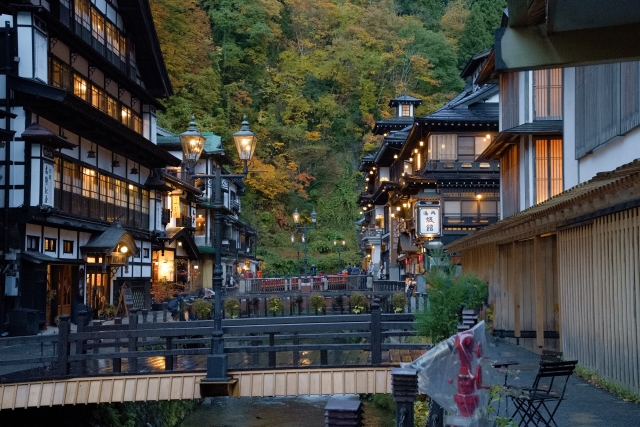
The series is set in Taisho-era Japan (roughly 1912–1926), which means lots of beautiful traditional architecture, kimono-clad characters, and a Japan that feels both familiar and deeply historical. It’s one of the reasons the country makes such a perfect setting — and why visiting the real locations feels so magical.
⛩️ Demon Slayer Pilgrimage: Real Locations to Visit
Here’s where things get fun. Japan has several spots that are either directly referenced in the story, visually inspired scenes in the anime, or just feel so much like the Demon Slayer world that fans have unofficially claimed them as sacred ground. Pack your Nichirin Blade (or, you know, a camera) and let’s go.
⛩️ 1. Kamado Shrine (Fukuoka) — The Name Says It All
Let’s start with the most obvious one: Kamado Shrine (Kamado-jinja, officially called Hofuman-gu Kamado-jinja) in Dazaifu, Fukuoka Prefecture. The shrine shares its name — and kanji — with the protagonist’s family name. Tanjiro Kamado. Kamado Shrine. Coincidence? Fans certainly don’t think so.
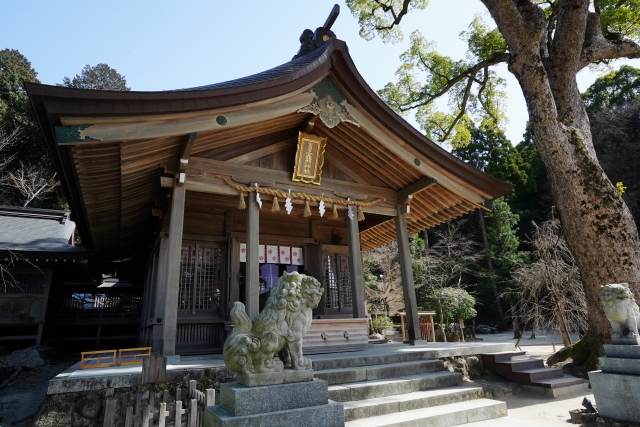
The shrine is nestled at the foot of the sacred Mount Homan (Houmanzan), and it has over 1,350 years of history. Originally built to protect Dazaifu (an ancient government seat) from evil spirits — specifically, to guard the kimon, the northeastern “demon gate” direction — it’s now famous as a spot for en-musubi, the tying of good relationships and destiny. The amulets and ema (wooden wishing plaques) have a color palette and design that fans immediately associate with the anime’s aesthetic. Deep reds, wisteria motifs, and atmospheric mountain surroundings — it genuinely feels like stepping into the story.
“If you want to feel like you’re stepping into the story, this is the place.”
The location is practical too. You can get there via the Nishitetsu Dazaifu Line to Dazaifu Station, then take the Mahoroba community bus to the “Uchiyama (Kamado Shrine)” stop. It’s about a 3-minute walk from there. The shrine is open year-round, with the amulet office running from 8:00 to 19:00. Cherry blossoms in spring and autumn foliage make it especially gorgeous.
👉 Official website: kamadojinja.or.jp
🌸 2. Ashikaga Flower Park (Tochigi) — The Wisteria Scene IRL
If you’ve watched Demon Slayer, you know wisteria flowers are basically kryptonite for demons. They grow near Final Selection — the brutal exam to become a Demon Slayer — and they appear in several dreamlike scenes throughout the series. And in Japan, there’s one place that recreates those scenes with almost supernatural accuracy: Ashikaga Flower Park in Tochigi Prefecture.
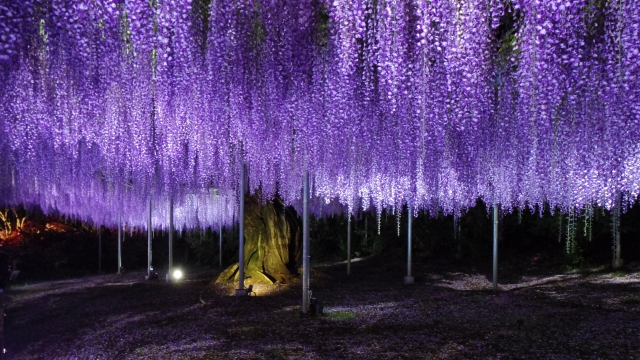
The park is home to over 350 wisteria plants, including a legendary o-fuji (giant wisteria) that covers an area equivalent to 600 tatami mats. The oldest trees have been growing for over 160 years. When they’re in full bloom in late April to mid-May, the cascading purple flowers create a canopy so dense and otherworldly that it genuinely looks like a scene from the anime. Visitors walk underneath curtains of lavender blossoms in what can only be described as a real-life fantasy sequence.
The night illumination is on another level entirely. The park’s winter light show, “Hana no Niwa: Flower Fantasy,” is certified as one of Japan’s Top 3 Illuminations — and when the wisteria light shows run in spring, you’ll understand why it went viral internationally. CNN even named it one of the world’s top dream travel destinations. The park has been embraced by the Demon Slayer fanbase as an unofficial pilgrimage site, and it’s easy to see why.
“One of the most visually ‘Demon Slayer’ places in Japan.”
Important note: wisteria has a season. The famous blooms happen roughly mid-April to mid-May. Check the park’s website for real-time bloom forecasts before you book your tickets — they update regularly and even announce daily changes.
The park is accessible by JR Ryomo Line to Ashikaga Flower Park Station (about 3 minutes on foot). Entry fees vary depending on bloom conditions and are announced daily.
👉 Official website: ashikaga.co.jp
🏯 3. Ookawaso Ryokan (Fukushima) — Welcome to the Infinity Castle
This one went absolutely viral online, and for good reason. Ookawaso is a traditional Japanese inn (ryokan) located in the Ashinomaki Onsen area of Aizuwakamatsu, Fukushima — and its lobby looks strikingly similar to the Infinity Castle, the demon villain Muzan Kibutsuji’s twisted, multi-directional lair.
The lobby features a stunning atrium with a floating stage in the center, surrounded by multi-level corridors and staircases that spiral around the open space. It’s Japanese woodwork and architecture done at a grand scale — and when you stand in it, surrounded by that structure, it genuinely feels like the scene where the Demon Slayer Corps faces off against the Upper Moons. The aesthetic is purely coincidental (the building was completed in 1989, long before the manga existed), but the resemblance is uncanny enough that it has attracted fans from around the world.
“Looks like it came straight out of the Infinity Castle.”
The floating stage hosts regular shamisen (a traditional Japanese string instrument) performances — usually from 16:00 to 18:00. While it’s a shamisen rather than the Infinity Castle’s signature biwa, the atmospheric music drifting through that elaborate wooden atrium is genuinely spine-tingling. Many guests arrive in yukata (casual kimono) and pose for photos on the stage, fully committing to the bit.
Beyond the Demon Slayer connection, Ookawaso is a legitimate luxury ryokan with spectacular cliffside outdoor baths overlooking a river gorge, seasonal kaiseki cuisine, and multiple types of sauna. It’s worth a stay even if you’ve never watched a single episode. A free shuttle bus runs from Aizuwakamatsu Station (reservation required).
👉 Official website: ookawaso.co.jp (available in English, Traditional Chinese, and Thai)
🌄 4. Mount Kumotori (Tokyo/Saitama/Yamanashi) — Tanjiro’s Home Mountain
For the hikers and the adventurous types: Mount Kumotori (Kumotoriyama) is widely believed to be the inspiration for Tanjiro’s mountainous hometown. Standing at 2,017 meters above sea level, it’s the highest peak in Tokyo Prefecture (yes, Tokyo has mountains — who knew?) and straddles the borders of Tokyo, Saitama, and Yamanashi.
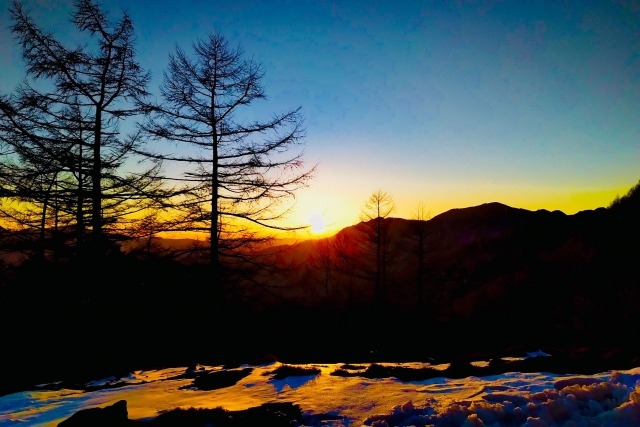
The mountain has the dense, misty forest atmosphere that you see in the early episodes of the anime — the kind of place where a family of charcoal makers could realistically live in isolation. The name itself is evocative: Kumotori means “cloud catcher.” Even without the Demon Slayer connection, it’s a serious and rewarding hike. Most people do it as a two-day trip with an overnight stay at a mountain hut. The views from the summit on a clear day are genuinely spectacular.
This one’s for those who want to earn their pilgrimage. Bring proper hiking gear, prepare for elevation, and go in spring or autumn for the best conditions.
🏮 5. Asakusa (Tokyo) — Where It All Began
In the very first episode (and early chapters of the manga), Tanjiro travels to Asakusa — Tokyo’s most historic district — and has his fateful first encounter with the series’ main villain, Muzan Kibutsuji. It’s a pivotal scene: Tanjiro spots Muzan blending in among modern-day crowds in a white suit, and the tension is electric.
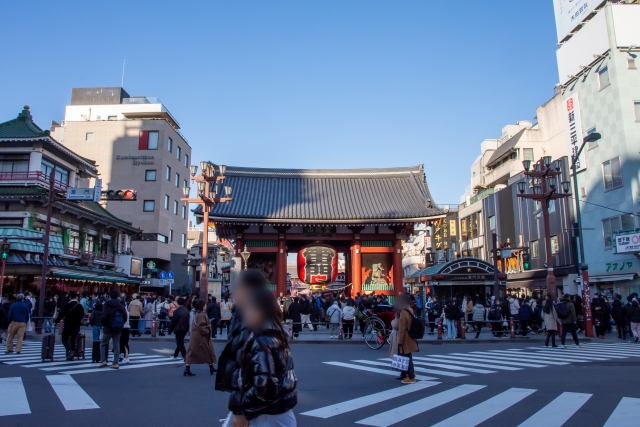
Asakusa is the ideal setting for this scene because it’s one of the few places in Tokyo that still carries the atmosphere of the Taisho era. The area around Senso-ji temple — Japan’s oldest temple — is filled with traditional architecture, rickshaws, paper lanterns, and shops selling traditional crafts and snacks. Walking through Nakamise-dori (the famous approach to the temple) surrounded by the buzz of old Tokyo, it’s easy to imagine Tanjiro weaving through the crowd, heart pounding.
“Walk here at night for a more authentic Taisho-era vibe.”
Visit at night for maximum atmosphere. The lanterns glow, the crowds thin out somewhat, and the ancient architecture looks even more dramatic in the low light. Even without the Demon Slayer angle, Asakusa is one of the most rewarding neighborhoods in Tokyo for any visitor to Japan — traditional snacks, incredible street food, and the magnificent five-story pagoda silhouetted against the city sky.
🛒 Where to Buy Demon Slayer Merchandise in Japan
Let’s be real: a big part of any anime pilgrimage is going home with more luggage than you arrived with. Japan is the motherland of official merchandise, limited-edition collaborations, and random convenience store collectibles. Here’s your complete shopping guide.
If you see something you like, buy it immediately. It might be gone in an hour.
🛒 JUMP SHOP — The Official Source
If you want official Demon Slayer merchandise, start here and start nowhere else. JUMP SHOP is the Shueisha-licensed official store for all Weekly Shonen Jump properties — and since Demon Slayer ran in Jump, this is ground zero for legitimate, high-quality goods. We’re talking figures, acrylic stands, keychains, apparel, stationery, snacks with branded packaging, and limited-edition items that you simply cannot buy anywhere else.
“If you buy only one souvenir, buy it here.”
There are 15 locations across Japan, including shops in Tokyo (Shibuya PARCO, and other locations), Osaka, Nagoya, Sapporo, and more. Note that some locations are extremely popular and may have timed entry restrictions during busy periods — check the website before you go.
👉 Official website: benelic.com/jumpshop
🧸 Animate Ikebukuro Flagship Store — The Cathedral of Anime Shopping
If JUMP SHOP is the official source, Animate Ikebukuro is the experience. Reopened in 2023 after a major renovation for its 40th anniversary, the Ikebukuro flagship store is considered the world’s largest anime merchandise shop — and it earns that title. The building spans 9 floors above ground and 2 underground, stocking hundreds of thousands of items across manga, anime goods, games, CDs, costumes, and accessories.
The Demon Slayer section is substantial and well-stocked. Beyond that, browsing all the floors is an experience in itself — even if you don’t buy anything, you’ll want to spend at least an hour just absorbing the sheer scale of Japanese otaku culture on display. Anime cafes, event spaces, a theater, and limited collaboration items round out what is genuinely a pilgrimage destination for anime fans worldwide.
It’s a 5-minute walk from JR Ikebukuro Station’s East Exit (North side). Hours are 10:00–21:00 daily.
👉 Official website (Ikebukuro Flagship): animate.co.jp/shop/ikebukuro
If you want a deeper look at what to expect (and how overwhelming it can get), I’ve written a full guide to one of the biggest stores in Japan:
👉 https://www.chame.biz/animate_ikebukuro/
From floor-by-floor breakdowns to what you should actually buy, it’ll help you navigate Animate like a pro instead of wandering around in a daze.
🏬 Don Quijote — The Unexpected Hidden Gem
This one surprises people. Don Quijote (or “Donki” as locals call it) is Japan’s beloved chaotic discount variety store — think a maze-like superstore where you can buy everything from fresh produce to luxury cosmetics to themed merchandise, all piled floor-to-ceiling in a system that somehow works. And it turns out Donki is actually a solid spot for anime goods, including Demon Slayer collaborations and cheaper knockabout merch that makes great gifts.
The real advantage of Donki is its hours: most locations are open until midnight or 24 hours. When you’ve spent all day sightseeing and suddenly remember you haven’t bought gifts for your friends back home, Donki at 11pm is your salvation. Look for collaboration cups, themed snacks, and clearance official goods at prices that won’t make you cry.
🎁 Bonus: Convenience Stores & Shopping Malls
Never underestimate Japanese convenience stores. 7-Eleven, Lawson, and FamilyMart regularly run anime collaborations that include limited-edition merchandise, snack packaging, and small collectibles. These items are genuinely unique — often exclusive to the collaboration period — and they’re cheap, lightweight souvenirs that fit perfectly in a carry-on. The trick is that they sell out fast, so grab them when you see them.
Large shopping malls and department stores (including the anime floors in places like Akihabara multi-story electronics stores) carry a wide range of Demon Slayer goods at various price points. If you’re striking out at specialty stores due to crowds or sell-outs, a mall anime corner can often surprise you.
📋 Quick Reference: Practical Tips Before You Go
Wisteria season matters: Ashikaga Flower Park’s wisteria blooms in mid-April to mid-May. If this is a priority, plan your trip around this window and check the park’s bloom forecast closer to your dates.
Kamado Shrine requires a bit of effort: It’s not right next to a major train station. Budget extra time for the community bus, and note that the mountain setting means the walk can be steep in parts. Completely worth it, but plan accordingly.
Ookawaso is a splurge: It’s a high-end ryokan, not a budget guesthouse. Book well in advance (it gets busy, especially on weekends), make sure to request the free shuttle bus when you reserve, and check the shamisen performance schedule on the official site.
Merchandise tip: Bring extra space in your luggage. Seriously. Japan’s packaging is beautiful and you will buy more than you planned. A lightweight foldable bag packed inside your main luggage is one of the best travel hacks for anime shopping trips.
Cash is still useful: Many smaller shrines and traditional stores prefer cash. Have some yen on hand even if you plan to use cards elsewhere.
IC card for trains: Get a Suica or Pasmo card immediately upon arrival. Tapping in and out of trains across the country (including the community bus to Kamado Shrine) is infinitely easier than buying individual tickets.
🎌 1-Day Demon Slayer Plan: Tokyo Edition
Only have one day in Tokyo and want to squeeze in as much Demon Slayer energy as possible? This itinerary is for you. It’s designed to be walkable, affordable, and genuinely fun — even if your travel companion has never watched a single episode. (They will understand by dinner. Trust us.)
🌅 Morning (9:00–12:00) — Asakusa: Where Tanjiro Met the Enemy
Start your day in Asakusa, the historic neighborhood where Tanjiro first encounters Muzan Kibutsuji in episode one. Arrive around 9:00 AM to beat the crowds at Senso-ji Temple — the famous five-story pagoda looks dramatically different (and frankly better) before tour groups arrive. Walk through Nakamise-dori, the traditional shopping street leading to the temple, and try some ningyo-yaki (small character-shaped cakes) or melonpan from the street stalls for breakfast. Budget around ¥500–800 for snacks here.
Spend an hour wandering the backstreets of Asakusa. The area around Denpoin Street and the western side of the temple complex has preserved a lot of the old Taisho-era atmosphere — low wooden buildings, paper lanterns, craft shops. This is the closest Tokyo gets to the Japan of Tanjiro’s world, and it costs nothing to walk through it. If you want, pop into a café for a proper coffee before heading to the next stop (¥500–700).
🛍️ Afternoon (12:30–17:00) — Ikebukuro: The Anime Pilgrim’s Paradise
Head from Asakusa to Ikebukuro by train (about 30 minutes, ¥200–300 with your IC card). This is where the serious shopping begins. Grab lunch near the station first — there are plenty of teishoku (set meal) restaurants and ramen spots in the area where a filling lunch costs ¥800–1,500.
Your main destination is Animate Ikebukuro Flagship Store — the world’s largest anime merchandise shop, 11 floors of everything you could ever want. Give yourself at least 90 minutes here. Budget whatever your wallet can handle, but realistically plan for ¥3,000–10,000 if you’re buying goods (it’s very easy to lose track of time and money simultaneously in this building).
After Animate, explore the surrounding streets. Ikebukuro’s “Otome Road” area has several smaller specialty shops selling doujinshi, figures, and character goods. It’s also worth checking nearby multi-floor hobby shops for Demon Slayer figures and collectibles at varying price points.
🌆 Evening (17:00–21:00) — JUMP SHOP + Dinner
Head to Shibuya (about 20 minutes from Ikebukuro) and make your way to JUMP SHOP at Shibuya PARCO (6th floor). This is where you pick up official Demon Slayer goods — figures, limited-edition items, apparel, and the kind of packaging that makes you want to take a photo before you open it. Budget ¥2,000–8,000 here depending on self-control levels.
Finish the night with dinner in Shibuya or head back toward Asakusa for a more traditional evening meal. Shibuya has everything from ¥1,000 ramen to ¥5,000 sit-down restaurants. After dinner, if you need last-minute gifts or realize you forgot something, Don Quijote in Shibuya is open late and almost certainly has what you need.
Pro tip: Wear comfortable shoes. You will walk more than you think, and there are a lot of stairs in Japanese shopping buildings. No one tells you this before your first trip.
💴 Budget Guide: How Much Does a Demon Slayer Day in Japan Actually Cost?
Let’s talk money. Japan has a reputation for being expensive, but the reality is more nuanced — and for Demon Slayer fans, the biggest variable is merchandise spending (which is entirely your own fault and we fully support your decisions). Here’s a realistic breakdown for a typical Demon Slayer-focused day in Tokyo, excluding accommodation.
🟢 Budget Traveler — Around ¥8,000–12,000/day
This is the “I’m here for the vibes, not the merch” tier. Breakfast from a convenience store (¥400–600), lunch at a ramen shop or curry stand (¥800–1,000), train rides across Tokyo (¥500–800 total for the day), and a simple dinner at a chain restaurant or izakaya (¥1,000–1,500). Entrance fees: Asakusa and Ikebukuro browsing are free; Animate is free to enter. You can have a genuinely great Demon Slayer day in Tokyo for around ¥8,000–10,000 if you’re disciplined about merch spending. Add ¥2,000–3,000 for one or two small souvenir purchases.
🟡 Mid-Range — Around ¥15,000–25,000/day
This is the sweet spot for most visitors. You’re eating at proper sit-down restaurants (¥1,200–2,000 for lunch, ¥2,500–4,000 for dinner), buying a reasonable haul of official goods from JUMP SHOP and Animate (¥5,000–10,000 budget), and not stressing about train fares. A café stop or two adds ¥600–1,000. This tier gives you a full, comfortable day with plenty of memories and luggage to show for it.
🔴 “I Came to Shop” — ¥30,000+/day
No judgment. This is the tier where the limited-edition figures, the full character apparel sets, and the “one more thing” items live. If you’re a serious collector or buying gifts for multiple people back home, ¥20,000–30,000 in merchandise alone is not unusual for a dedicated anime shopping day in Tokyo. Add food and transport and you’re looking at ¥30,000–50,000. Again: no judgment. You’re in the right country for it.
📊 Key Entry Fees to Know
Asakusa / Senso-ji: Free to enter the grounds and the main gate area. Specific temple halls may have a small fee (¥200–500) but the famous exterior and shopping street are free.
Ashikaga Flower Park (wisteria season): Adult admission ranges from ¥1,200 to ¥2,300 depending on the date and bloom conditions. Prices peak during the best bloom weekends and Golden Week. Always check the official site the day before your visit as fees are announced daily.
Kamado Shrine: Free to visit. The grounds and atmosphere cost nothing. Amulets and omamori start from around ¥500–1,000 if you’d like to take something home.
Ookawaso Ryokan: This is a full overnight stay at a premium ryokan — prices vary significantly by room type and season, but expect ¥20,000–50,000 per person including two meals. Day-trip visitors can access the baths (day-use hot spring entry was around ¥1,500 per adult at time of writing, but check the official site for current pricing).
Tokyo trains: Individual trips cost ¥150–300 per journey within central Tokyo. A full day of moving around the city rarely exceeds ¥1,000–1,500 on the subway. Load your Suica or Pasmo card and stop thinking about it.
🗾 Final Thoughts: Why Demon Slayer Belongs in Japan
What makes the Demon Slayer pilgrimage experience special is that it’s not just about finding specific “set locations.” It’s about understanding that the world of the series is deeply rooted in real Japanese culture, history, and geography. The Taisho era aesthetic isn’t just a visual choice — it reflects a real period in Japanese history when the country was modernizing rapidly while holding on to centuries of tradition. The wisteria, the mountain villages, the traditional inn architecture, the streets of old Asakusa — all of it is genuinely Japan, dressed up only slightly by a brilliant storyteller’s imagination.
When you stand at Kamado Shrine and look out at the forested mountain behind it, or walk under 600 tatami-mats worth of wisteria in full bloom, or hear shamisen echoing through the wooden atrium of Ookawaso — you’re not just experiencing an anime. You’re experiencing Japan through one of the most evocative lenses available to a modern visitor.
And honestly? Even if you arrive knowing nothing about Demon Slayer, you’ll still be surrounded by some of the most beautiful and historically rich places this country has to offer. The series just gives you a reason to look a little more carefully.
Happy travels — and watch out for demons after dark. 🌙


Share your thoughts