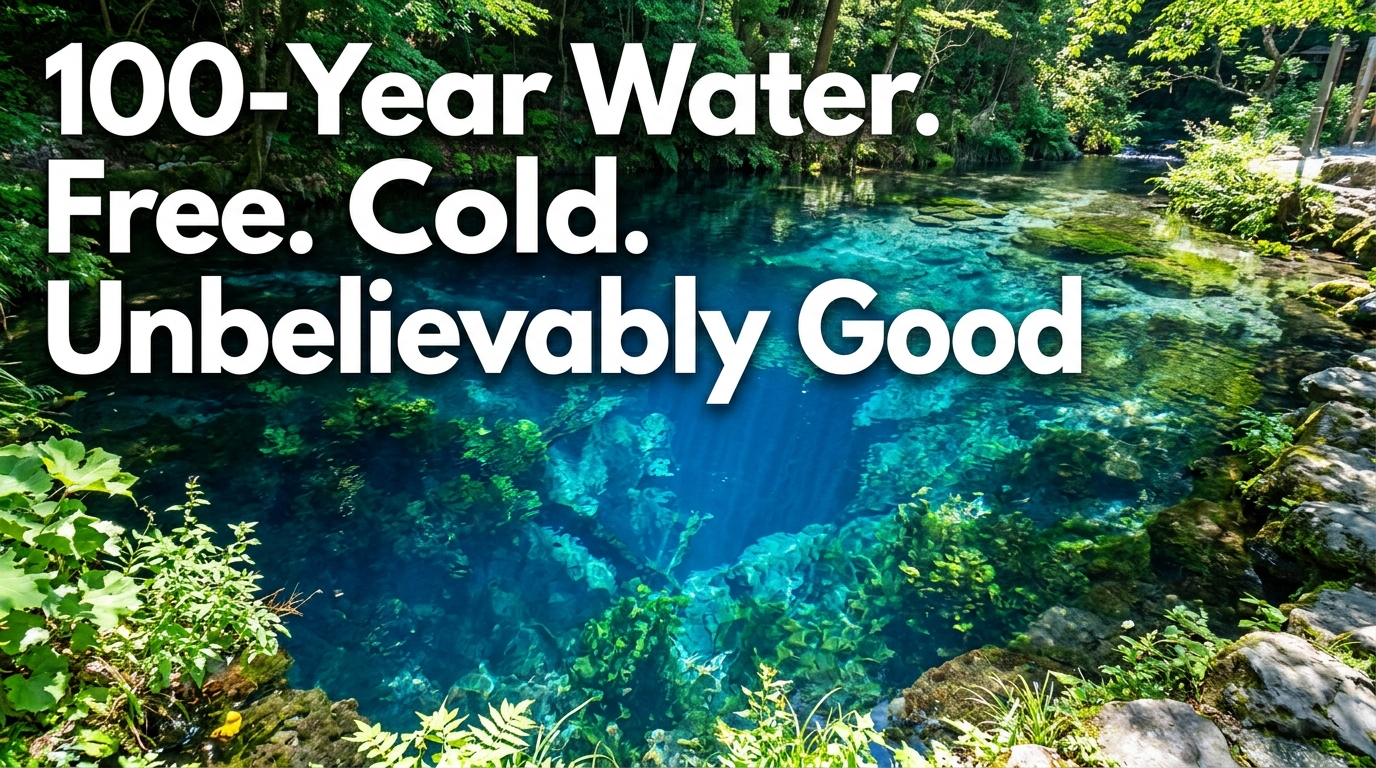
Let me be honest with you from the start: I live in the Japanese countryside, and I pay zero yen for water every month. Not a typo. Not a trick. My tap water comes straight from natural spring water flowing through the mountains — clean, cold, and outrageously delicious. Every morning, I fill my kettle and think, “People in cities actually buy this stuff in bottles?”
That’s exactly why I’m writing this article. Because Japan is sitting on some of the most incredible spring water in the world, and most tourists walk right past it while handing over 150 yen to a vending machine. Let’s fix that.
This guide is for anyone visiting the Tokyo area who wants to discover where to find real spring water (wakimizu), how to drink it safely, which spots are worth the trip, and — bonus — how to carry it in style with a Japanese vacuum bottle that will make your friends back home jealous.
Ready? Grab your reusable bottle. Let’s go.
- What Is Spring Water — And Why Does It Taste So Good?
- Where to Find Spring Water Near (and Beyond) Tokyo: 4 Spots Worth Visiting
- ⚠️ Important: Read This Before You Drink Spring Water in Japan
- 📱 Bonus: Download mymizu Before You Come to Japan
- 🧴 Getting the Right Bottle: Japanese Vacuum Flasks Are World-Class
- 📋 Quick Reference: Spring Water Spots Near Tokyo
- Final Thoughts: Drink Like a Local
What Is Spring Water — And Why Does It Taste So Good?
Spring water, or wakimizu, is groundwater that naturally rises to the surface through gaps in the earth. In the Tokyo area, rainwater soaks into the volcanic Musashino Plateau, filters slowly through layers of gravel and clay over many years, and then emerges crystal-clear along cliff lines called gaisen.
The result? Water that is naturally soft, cool (around 15°C year-round), and faintly sweet — a completely different experience from heavily chlorinated urban tap water. This is why Japanese spring water has such a devoted following, and why locals will drive 30 minutes just to fill up their bottles.
In my case, living in a rural area of Yamanashi Prefecture, this is simply what comes out of the tap. My water bill is 0 yen. I’m not bragging — okay, maybe a little — but my real point is this: once you taste proper spring water, you understand why Japan has an entire culture built around it. And now you can experience a piece of that culture, even from central Tokyo.
Where to Find Spring Water Near (and Beyond) Tokyo: 4 Spots Worth Visiting
Tokyo may look like a sea of concrete and convenience stores, but the western suburbs hide something remarkable: genuine, flowing springs that have been cherished for centuries. And just one Shinkansen stop away, Shizuoka Prefecture holds what I’d call the holy grail of Japanese spring water — a place I grew up near, and one that still takes my breath away every time I visit. Here are four spots that are accessible, beautiful, and genuinely worth your time.
① Ochiai River & Minamisawa Springs, Higashikurume
The headline: This is the only spot in the entire Tokyo Metropolis to be selected for the Ministry of the Environment’s prestigious “Heisei Meisuihyakusen” — the top 100 famous waters of Japan. That’s not a small thing. Out of the whole country, this is what made the list from Tokyo.
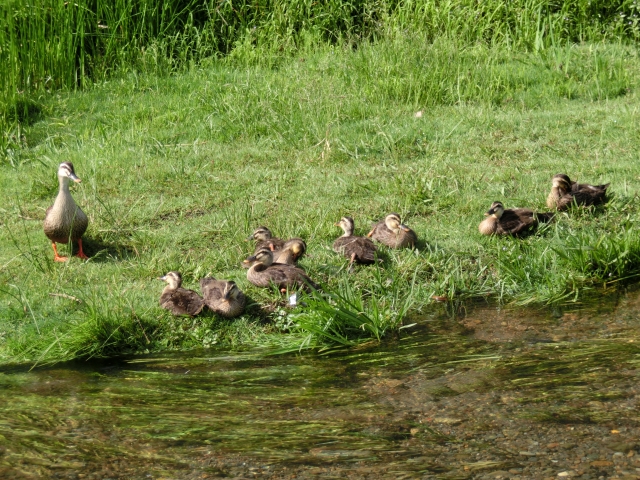
The springs here produce an astonishing 10,000 tonnes of water every single day, flowing into the Ochiai River and creating a lush, walkable natural corridor right in the middle of a residential area. Kingfishers nest along the banks. Rare fish species thrive in the clear gravel riverbed. You’ll forget you’re 18 minutes from Ikebukuro by train.
What to expect: The spring source itself is protected by fencing (both to preserve the ecosystem and to protect the water quality), so you won’t be dunking your bottle directly into the spring. However, the overall environment — the walking trail, the stream, the bamboo groves — is a genuinely refreshing experience. Think of it as a nature walk with a side of “wait, this is Tokyo?”
- Access: From Ikebukuro, take the Seibu Ikebukuro Line to Higashikurume Station (about 18 min). Walk south from the west exit — roughly 15 minutes on foot.
- Walking route: The city has a mapped 3.5 km water trail (approx. 50 min) that loops through the key spots.
- Tip: Come on a weekday morning for the quietest experience. Locals jog, walk dogs, and let their kids splash in the shallows. Very wholesome.
- No parking nearby — go by train or rent a bicycle at the station.
🔗 Official city page (Japanese): Higashikurume City — Minamisawa Springs
🔗 Ministry of Environment listing: Heisei Meisuihyakusen — Ochiai River & Minamisawa Springs
② Anazawa Tenjinja Shrine, Inagi — Sacred Spring Water
Here’s where it gets interesting for anyone who loves Japan’s spiritual atmosphere: some of the best spring water in the Tokyo area flows directly from Shinto shrines.
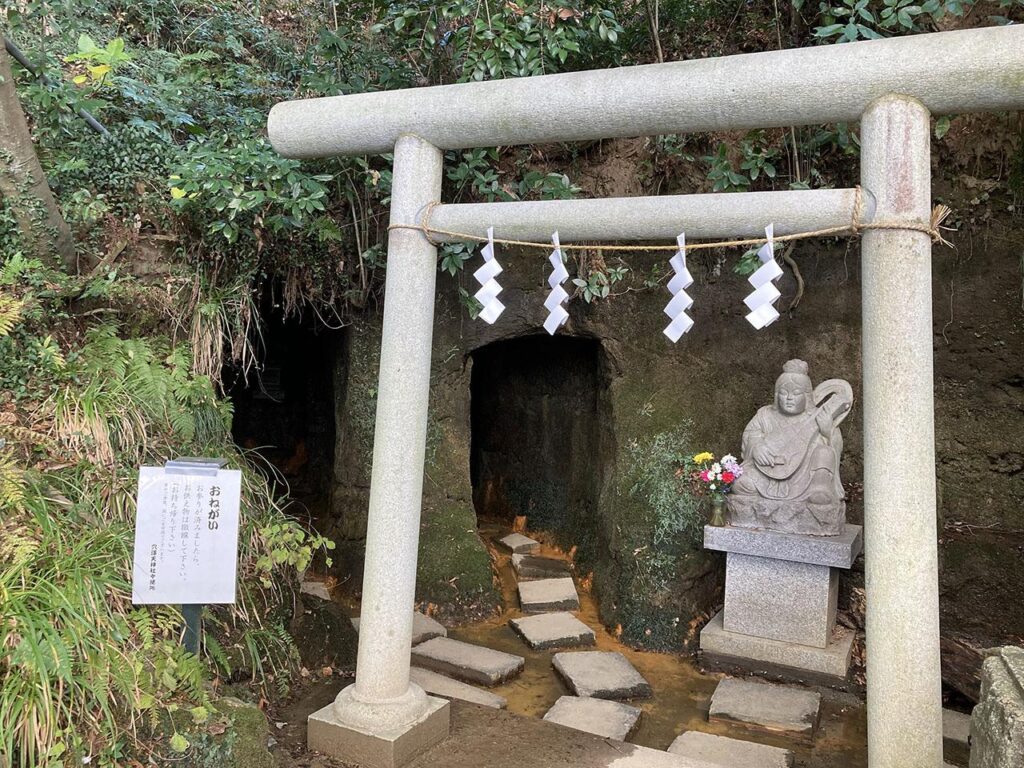
Anazawa Tenjinja in Inagi City is one of Tokyo’s oldest shrines — founded, according to legend, in 423 BCE — and it sits nestled against the Tama Hills, with a dramatic cave carved into the hillside and a steady flow of sacred spring water (御神水, omimizu) pouring from the rock below.
This spring is officially listed on Tokyo’s 57 Famous Springs by the Tokyo Metropolitan Government’s Bureau of Environment. Locals arrive regularly with large bottles to fill up. The atmosphere — ancient stone steps, towering trees, the sound of flowing water — is genuinely magical.
- Access: 5-minute walk from Keio Yomiuriland Station (Keio Sagamihara Line). Walk east along the Misawa River.
- Water limit: Signage asks that you take no more than 20 litres per visit — please be respectful.
- A cup is provided at the spring, so you can taste it on the spot.
- Note: The spring is at the base of the hill, along the riverside path — not at the main shrine building at the top. Look for the cave on your left as you walk the riverside trail.
🔗 Tokyo Metropolitan Government — Bureau of Environment listing: Tokyo’s 57 Famous Springs — No. 48: Anazawa Tenjinja
③ Jindaiji Temple Area, Chofu — Soba, Springs & a Stroll
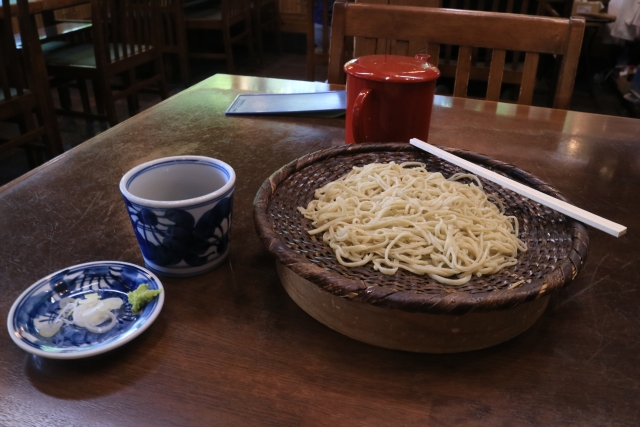
If you want to combine spring water with one of the best soba noodle lunches of your life, the area around Jindaiji Temple in Chofu is your answer.
This area has been famous for buckwheat soba since the Edo period, and the reason the noodles taste so exceptional is the water. The Kokubunji Gaisen cliff line runs through here, and the area is rich in natural groundwater. Several spots near the temple precincts have groundwater fill-up stations with water quality certificates posted on-site — so you can fill your bottle with a clean conscience.
Look out for “Shin no Mizu” — a groundwater supply point near local farm stands, with water quality test results displayed. It’s a great example of how Japanese communities treat their water sources with genuine care and transparency.
- Access: From Shinjuku, take the Keio Line to Tsutsujigaoka Station, then bus to Jindaiji (approx. 40 min total). Or from Mitaka Station (JR Chuo Line), direct bus to Jindaiji.
- Plan: Water fill-up → temple visit → soba lunch at one of the 20+ soba restaurants in the area → Jindai Botanical Garden next door. A perfect half-day.
④ Kakitagawa Springs, Shizuoka — Japan’s Greatest Spring Water ⭐ Editor’s Pick
Full disclosure: I grew up near here. So when I say this place is extraordinary, I’m not just repeating tourism brochure language — I’m telling you something I know in my bones.
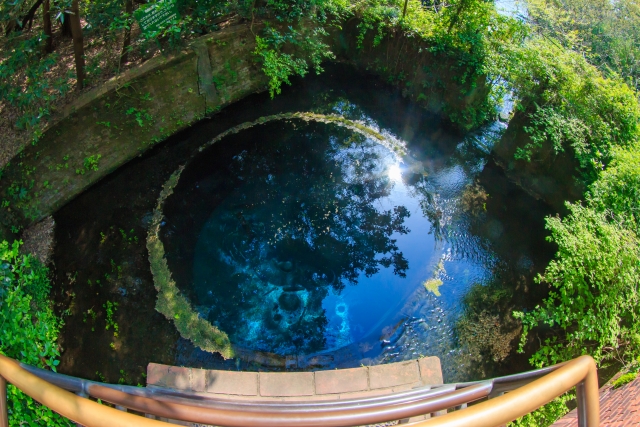
The Kakitagawa Spring, located in the small town of Shimizu-cho in Shizuoka Prefecture, is not just Japan’s largest spring — it is one of the most jaw-dropping natural phenomena in all of East Asia. Snowmelt and rainfall from Mount Fuji seep deep into ancient lava rock, filter through the earth for roughly 100 years, and then erupt from the ground here — clean, cold, and impossibly pure. The locals call it “hyakunen mizu” — the hundred-year water. The water you drink today fell as snow on Fuji before you were born.
Let that sink in for a moment.
How much water are we talking? Approximately 1 million tonnes per day — equivalent to filling around 2,000 Olympic swimming pools, every single day, without stopping. It is the largest spring discharge in Japan, and the river it creates — the Kakita River — is also Japan’s shortest Class-1 river. It literally begins as a giant spring and ends at the Kano River just 1.2 km later. It was also designated a National Natural Monument in 2011.
🔵 The Blue Hole — Most Instagrammable Natural Spot You’ve Never Heard Of
Walk to the Second Observation Deck in Kakitagawa Park, lean over the railing, and you will see something you won’t find anywhere else in Japan: a vast, perfectly circular well, glowing in a color of cobalt blue so deep and luminous it looks like someone Photoshopped it.
This is actually the remnant of a well drilled by a textile factory that once operated here. When the factory closed and the well was abandoned, the spring water reclaimed it — now billowing upward from below, carrying fine white sand that dances and swirls in the current. The combination of crystal-clear water, refracted sunlight, and rising white particles creates that impossible blue. No filter needed. No enhancement. Just Fuji’s water doing what it’s been doing for a century.
It is, genuinely, one of the most beautiful things I have ever seen — and I have seen it many times.
💧 Yes, You Can Actually Drink It — Right There, From a Tap
Here’s the part that makes Kakitagawa a standout among all the spots in this guide: there are water fill-up stations inside and around the park where you can drink the spring water directly, no boiling required.
The area around the park, called “Kakitagawa Yusui no Michi”, has multiple fill-up points operated by local businesses. Signs at some locations simply read: “この水飲めます” — “You can drink this water.” Fill your bottle. Drink it cold. It is soft, clean, faintly sweet, and unlike anything that comes from a plastic bottle.
Note: The fill-up spots are within private commercial facilities (restaurants, shops), so they operate during business hours. Check ahead if you’re visiting early morning or evening. The park itself is free to enter.
🍽️ Spring Water Cuisine — Tofu, Gelato & More
The water doesn’t just go in your bottle — it goes in your food. The Kakitagawa area is famous for tofu made using the spring water, and the tofu gelato sold at Kakitagawa Tofu-kan is genuinely one of the better things you can eat in Japan on a warm afternoon. Rich, subtly sweet, and cold in a way that only spring-chilled ingredients can achieve. Pair it with a cup of yusui coffee brewed from the same water, and you have a pretty perfect stop.
Getting There — Golden Route Friendly
- From Tokyo: Take the JR Tokaido Shinkansen from Tokyo Station to Mishima Station (approx. 45–55 min on Kodama, or faster on Hikari). From Mishima, take the Tokai Bus toward Fujii-hara and get off at Kakitagawa Yusui Koen-mae stop — about 13–15 minutes, right at the park entrance.
- From Osaka/Kyoto: Already on the Tokaido Shinkansen? Mishima is a natural stop on the Tokyo–Kyoto–Osaka golden route. Add a 2–3 hour detour and see one of Japan’s most remarkable natural wonders.
- By car: From Numazu IC (Tomei Expressway), approximately 15 minutes. Paid parking available at the town-operated lot (¥200 per visit, open 8:30–16:30).
- Free entry to the park.
🔗 Official town page (with English PDF guide): Shimizu-cho — Kakitagawa Park (清水町)
🔗 Ministry of Environment Meisui listing: Showa Meisuihyakusen — Kakitagawa Springs
🔗 Izu Geopark (English, with geological background): Kakitagawa — Izu Peninsula Geopark
⚠️ Important: Read This Before You Drink Spring Water in Japan
Japan’s spring water culture is real, beautiful, and worth experiencing — but a few ground rules will keep your stomach happy and your experience respectful.
Rule 1: Boil It First If You’re Unsure
Even water that looks perfectly clear and tastes amazing can carry microorganisms that your body isn’t used to. Tokyo Metropolitan Government and most local municipalities recommend boiling spring water before drinking, especially if you have a sensitive stomach or aren’t used to Japanese water.
The practical solution: fill your bottle at the spring, pop it in your hotel room kettle that evening, let it cool, and you’re good to go. Or, if the spring has a posted water quality certificate, many visitors do drink it as-is — just be aware of the official guidance.
Bottom line: Beautiful ≠ is automatically safe for every stomach. When in doubt, boil.
Rule 2: The Chozuya Water Is NOT for Drinking
This one is important. When you visit a Japanese shrine, you’ll see a stone basin with flowing water near the entrance. This is called a chozuya, and it’s used for a ritual hand purification before prayer — not for drinking.
Every year, tourists see the flowing water, notice how clean it looks, and take a big sip. Don’t be that person. It’s not filtered for drinking, it may contain ritual additives, and it’s genuinely not meant to be consumed. The sign is in Japanese, so now you know: hands only, not mouth. (Well, there’s technically a mouth-rinsing step in the ritual, but that’s a whole other story — and you still don’t swallow it.)
Rule 3: Your Stomach May Need Time to Adjust
Japanese spring water is typically soft water (nansui) — low in minerals compared to, say, French mineral water. If you come from a country with harder water, the switch can occasionally cause some digestive surprise. Not dangerous, just unexpected.
Start with a small amount and see how you feel before refilling your entire 1-litre bottle. Your body will adjust, and many people find Japanese soft water actually feels gentler on the stomach than what they’re used to at home.
📱 Bonus: Download mymizu Before You Come to Japan
While you’re planning your trip, do yourself a favour and download mymizu — Japan’s first free water refill app, available in English, for both iOS and Android.
The app shows you a map of over 200,000 refill spots worldwide (including 11,000+ in Japan), ranging from public water fountains to eco-friendly cafes and restaurants that offer free refills. It also lets you track how many plastic bottles you’ve saved — which is both motivating and a fun conversation starter.
It was created by a Japanese nonprofit called Social Innovation Japan, and has won recognition from the United Nations Development Programme. In short: it’s legitimate, it’s useful, and it’s exactly the kind of tool that makes sustainable travel in Japan genuinely easy.
🔗 Official website: mymizu.co (English)
🧴 Getting the Right Bottle: Japanese Vacuum Flasks Are World-Class
If you’re already traveling with a reusable bottle — great. If not, or if yours is heavy and leaks at the worst possible moment, Japan is genuinely one of the best places in the world to upgrade.
Japanese vacuum flasks (mahōbin — literally “magic bottles”) are renowned globally for their insulation performance and feather-light weight. You can find them easily at Loft, Tokyu Hands, or Yodobashi Camera in most major cities.
Three brands worth knowing:
- Zojirushi — Their seamless lid design means no rubber gasket to lose or forget to wash. Known for excellent heat retention and virtually leak-proof construction. A classic choice.
- Tiger— Their “Yume Juryoku” (“Dream Gravity”) series uses proprietary technology to achieve remarkable lightness. Their easy-open cap is a joy to use with one hand, even in a rush.
- Thermos — The JOO-500 model has a clever carry loop that folds flat when not in use — great for active travelers who don’t want extra bulk. Thermos Japan’s quality control is exceptional.
Any of these will keep cold spring water cold all day and double as an excellent souvenir that actually gets used. Much better than another keychain.
📋 Quick Reference: Spring Water Spots Near Tokyo
| Spot | Location | Access | Drink On-Site? | Official Status |
|---|---|---|---|---|
| Ochiai River & Minamisawa Springs | Higashikurume City, Tokyo | Seibu Ikebukuro Line → Higashikurume St. | View/enjoy (source fenced) | Heisei Top 100 Famous Waters |
| Anazawa Tenjinja Sacred Spring | Inagi City, Tokyo | Keio Line → Yomiuriland St. (5 min walk) | ✅ Yes (cup provided) | Tokyo’s 57 Famous Springs |
| Jindaiji Temple Area | Chofu City, Tokyo | Bus from Tsutsujigaoka or Mitaka St. | ✅ Yes (quality-tested groundwater) | Kokubunji Gaisen spring area |
| ⭐ Kakitagawa Springs | Shimizu-cho, Shizuoka | Shinkansen → Mishima St. → bus 13 min | ✅ Yes — drink direct, no boiling needed | Showa Top 100 Famous Waters · National Natural Monument |
Final Thoughts: Drink Like a Local
Japan has a deep and genuine reverence for water. From the ritual purification at shrines to the careful management of century-old springs, from the engineers who design world-class vacuum flasks to the volunteers who keep urban rivers clean enough for kingfishers — water here is treated with respect.
I live with that reality every day. When I open my tap and hear water that has filtered through mountain rock for years before reaching my kitchen, I feel genuinely lucky. And I want you to experience at least a small version of that during your visit.
Fill your bottle. Take a sip. Look around at the bamboo, the river, the shrine stones covered in moss. This is Japan at its quietest and most honest.
Now go find your spring. 🚰
Have you visited any of these spots, or found a great spring water location in Japan that I missed? Drop a comment below — I’d love to hear about it!

Share your thoughts