Let’s be honest: when most people think of acupuncture, they picture themselves as a human pincushion — lying on a table, grimacing, and wondering if this was, perhaps, a terrible idea. Maybe you’ve heard stories about Chinese acupuncture and its famously assertive needles. The kind that makes you go “Ow.” Loudly.
But here’s the thing: Japanese acupuncture is an entirely different experience — and it just might change your life. (Or at least your chronically stiff shoulders. Which, at some point, feels the same.)
I know this firsthand. As someone who suffers from perpetual neck and shoulder tension — the kind that creeps up into skull-splitting headaches — I’ve been a devoted fan of Japanese acupuncture for some time now. And I’m here to tell you: if you’re visiting Japan and you haven’t booked a session at a shinkyūin (鍼灸院, an acupuncture clinic), you are missing out on one of the most quietly extraordinary experiences this country has to offer.
- 🌏 A Tale of Two Needles: China vs. Japan
- 🎋 The Hallmarks of Japanese Acupuncture
- ✨ “Hibiki” — The Secret Language of the Needle
- 🩺 Who’s Holding the Needle? Understanding Japanese Qualifications
- 🔥 Moxibustion (Okyu): The Warm Companion
- ⚡ Electroacupuncture: When Tradition Gets a Technological Upgrade
- 💆 Beauty Acupuncture: When the Wellness World Met the Beauty World
- 💴 What to Expect: Price, Process, and Practical Tips
- 🗼 Where to Try Acupuncture in Tokyo (English-Friendly Clinics)
- 🗾 A Brief Timeline: How Japanese Acupuncture Became What It Is
- 💬 My Personal Take (Because, Yes, I Have One)
- 🌿 The Bottom Line
- 📚 Resources & References
🌏 A Tale of Two Needles: China vs. Japan
Chinese acupuncture is world-famous — and for good reason. It has a history stretching back over 2,000 years, and the Yellow Emperor’s Classic of Medicine (Huangdi Neijing), written during the Han Dynasty, laid the theoretical groundwork that still underpins acupuncture around the globe.
But let’s be real: Chinese needles are thicker, inserted with a direct snap of the wrist (no guide tube!), and the whole vibe leans toward stronger stimulation. There’s even a specific sensation called de qi — a heavy, aching, almost electric sensation that tells you the needle has “arrived.” Some people love it. Others describe it as “being poked with a small javelin.” Both descriptions are valid.
Japanese acupuncture took a different path.
When acupuncture first arrived in Japan from Korea and China around the 6th century, Japanese practitioners didn’t just copy-paste the technique. Over the centuries — particularly during the Edo period (1603–1868), when Japan was partially closed off from the world — Japanese acupuncturists developed their own highly refined approach. Cut off from constant Chinese influence, they innovated.
The result? A style of acupuncture that is arguably the world’s most gentle, precise, and thoughtful tradition. Think of it as the difference between a sledgehammer and a master calligrapher’s brush. Both are tools. The outcomes are very different.
🎋 The Hallmarks of Japanese Acupuncture
1. The Shinkan: A Tiny Tube That Changes Everything
One of the most important inventions in Japanese acupuncture history is the guide tube, known as the shinkan (鍼管). It was developed in the 17th century by a visually impaired acupuncturist named Waichi Sugiyama — a legendary figure who went on to open Japan’s first acupuncture school.
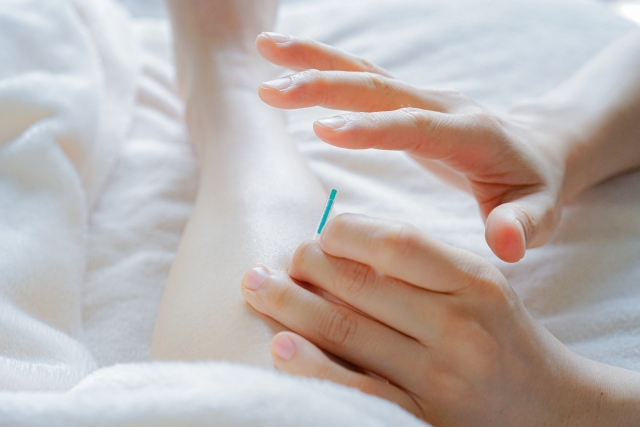
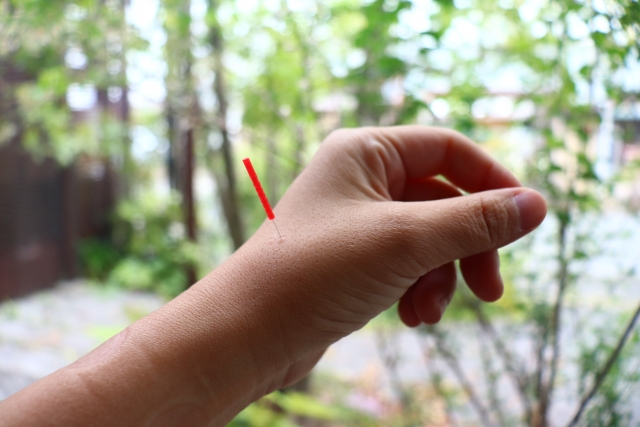
Here’s how it works: a thin needle is placed inside a small hollow tube. The tube is positioned on the skin, the needle is tapped gently in, and then the tube is removed. The result is a needle insertion so smooth that many patients genuinely don’t feel it at all.
Seriously. You might look down, see a needle sticking out of your arm, and think: “Huh. When did that happen?”
This technique is now used globally, but it remains the heart and soul of Japanese-style acupuncture.
2. Thinner Needles, Bigger Results
Japanese needles are significantly thinner than their Chinese counterparts. We’re talking needles that would make a sewing needle feel chunky. The philosophy: minimal stimulation, maximum precision. Rather than overwhelming the body with strong signals, Japanese acupuncture works with the body’s own energy — gently nudging it in the right direction.
This makes it particularly approachable for first-timers, people sensitive to pain, children, and the elderly. It’s acupuncture for humans who don’t particularly enjoy being poked.
3. The Art of Hara Diagnosis
Before a needle is even picked up, a skilled Japanese acupuncturist will spend time on abdominal diagnosis (hara shindan, 腹診). By gently palpating the abdomen, they can assess the state of internal organs, detect imbalances in energy pathways (meridians), and design a treatment tailored specifically to you — not just your symptoms, but your whole system.
It’s the kind of holistic attention that Western medicine doesn’t always have time for, and it’s one of the reasons Japanese acupuncture feels less like a medical procedure and more like being genuinely, thoroughly looked after.
✨ “Hibiki” — The Secret Language of the Needle
Here’s where things get philosophically interesting — and this is the concept that really separates Japanese acupuncture from everything else.
In Japanese acupuncture, practitioners speak of hibiki (響き) — a word that means “resonance” or “echo.” It describes the subtle sensation that occurs when a needle precisely contacts an acupuncture point (tsubo, ツボ). Not pain. Not the heavy ache of Chinese de qi. Something altogether more refined.
Hibiki might feel like:
- A gentle electric current spreading outward from the needle
- A warm, blooming sensation that radiates slowly through the tissue
- A faint, almost musical “ping” — as if a string has been plucked inside your body
It’s hard to describe until you’ve felt it. The closest analogy might be pressing exactly the right key on a perfectly tuned piano — that moment where the note resonates fully, fills the room, and then slowly fades. That’s hibiki.
For the acupuncturist, detecting hibiki is both a skill and an art. It tells them they’ve found the exact right point, at the exact right depth, with the exact right angle. It’s the difference between a good acupuncturist and a great one.
Some people — particularly those used to Chinese-style treatment — actually miss the heavy sensation of de qi at first. Fair enough! But many discover that hibiki‘s gentle resonance is not only more comfortable; it’s deeply, profoundly relaxing. There’s a reason patients regularly fall asleep mid-session. (Yes, with needles in. Yes, this is normal. Yes, it says something beautiful about Japanese acupuncture.)
🩺 Who’s Holding the Needle? Understanding Japanese Qualifications
One of the most important things to know before booking any treatment in Japan is the qualification system. And it’s more interesting — and more reassuring — than you might expect.
National Licenses: The Gold Standard
In Japan, acupuncturists must hold two separate national licenses: hari-shi (はり師, acupuncturist) and kyū-shi (きゅう師, moxibustion therapist). Together, these are commonly referred to as the shinkyu-shi (鍼灸師) qualification.
To earn these licenses, candidates must:
- Study for at least 3 years at an approved university or vocational school
- Pass rigorous national examinations administered by a government-approved body
- Demonstrate both theoretical knowledge and hands-on clinical competence
Similarly, practitioners of anma massage and shiatsu (anma massage shiatsu-shi, あん摩マッサージ指圧師) must also hold a national license. These therapists specialize in hands-on techniques: pressing, kneading, stroking, and percussion. Many practitioners hold both sets of qualifications, offering a comprehensive treatment that combines needles, moxa, and skilled manual therapy.
This is a serious, rigorously trained profession — not something anyone does after a weekend course.
⚠️ The Seitai (整体) Situation: A Word of Caution
Here’s something important that many visitors don’t know: seitai (整体, “structural alignment” or “chiropractic-style therapy”) is not a nationally regulated profession in Japan. There is no government-issued license for seitai practitioners.
This doesn’t mean all seitai practitioners are unqualified — many have undergone extensive private training, and the quality can be excellent. But it does mean the range of competence varies enormously. Unlike a licensed shinkyu-shi, a seitai practitioner’s skills are not verified by a national examination.
When in doubt, look for clinics that clearly display their national license credentials (menkyoshō, 免許証), or ask directly. In Japan, licensed practitioners are proud to show their qualifications — and they should be.
For more information on national qualifications, you can check the official website of the Ministry of Health, Labour and Welfare (厚生労働省).
🔥 Moxibustion (Okyu): The Warm Companion
Walk into almost any Japanese acupuncture clinic and you’ll notice a distinctive, slightly smoky, herb-tinged scent in the air. That’s moxa — dried mugwort (Artemisia moxa) — and it’s burned as part of a treatment called okyu (お灸, moxibustion).
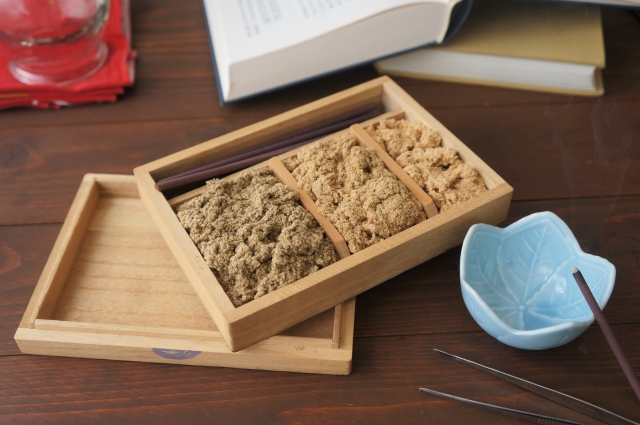
Moxa is placed directly on the skin (in tiny amounts), on a protective base like a ginger slice, or held above the skin on the end of a needle, and then slowly burned. The warmth penetrates deeply into the tissue, stimulating circulation, relaxing muscles, and invigorating what practitioners describe as the body’s ki (気, vital energy).
And here’s my personal, totally non-medical, enthusiastically subjective opinion: okyu is one of the most extraordinarily pleasant things that has ever happened to my body. There’s this deep, spreading warmth — not hot, not painful, just perfectly, bone-deep comfortable — that moves through the tissue like sunlight through a window. For shoulder tension and the kind of neck stiffness that makes you feel like you’re wearing a concrete scarf, it’s revelatory.
I should be clear: I’m not a doctor, this is not medical advice, and your experience will vary. But don’t be surprised if you find yourself booking a second appointment before your first one is even over.
⚡ Electroacupuncture: When Tradition Gets a Technological Upgrade
Many modern Japanese acupuncture clinics also offer electroacupuncture (denshishin, 電鍼 or parusu tsubo shinkyu). After needles are inserted into the appropriate points, small clips are attached to the needle handles, and a mild electrical current is passed through them.
The sensation is a gentle, rhythmic pulsing — think TENS machine, but with the precision of acupuncture point targeting behind it. Electroacupuncture is particularly popular for muscular pain, sports injuries, and chronic conditions. The current can be adjusted in frequency and intensity to suit individual needs.
For people with severe muscle tension — the kind that’s been stubbornly refusing to respond to anything — electroacupuncture can be genuinely game-changing. The combination of precise point location and electrical stimulation can penetrate deeper into muscle tissue than manual needling alone.
💆 Beauty Acupuncture: When the Wellness World Met the Beauty World
In recent years, one particular corner of the acupuncture world has exploded in popularity: biyō-shin (美容鍼, cosmetic or facial acupuncture).
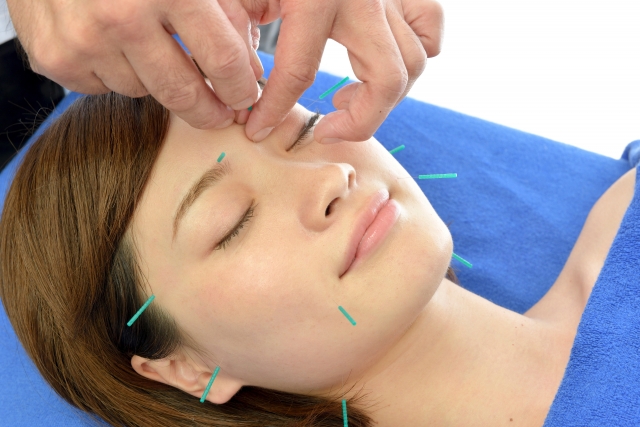
The concept: ultra-fine needles inserted into specific points on the face stimulate collagen production, improve circulation, reduce puffiness, and address concerns like fine lines, sagging, and uneven skin tone. Unlike invasive cosmetic procedures, it works with the skin’s own regenerative capacity — encouraging the body to heal and renew itself.
Japanese cosmetic acupuncture has developed rapidly over the past two decades, with dedicated training programs, specialist clinics, and growing international recognition. The Japan Medical Cosmetic Acupuncture Association (JMCAA / 日本医療美容鍼灸協会) provides certification for practitioners working in this field.
Major beauty and lifestyle magazines now regularly feature facial acupuncture, and clinics in Tokyo’s Omotesando and Aoyama districts draw international clientele specifically for the experience. It’s wellness tourism with a very sophisticated needle.
💴 What to Expect: Price, Process, and Practical Tips
The Price
One of the things I appreciate most about Japanese acupuncture is how accessible it is. A standard session — typically 45 minutes to an hour — usually costs around ¥5,000–¥7,000 (approximately $35–$50 USD). For a treatment this thorough, this skilled, and this effective, that’s genuinely excellent value.
Some premium clinics or specialist cosmetic acupuncture sessions may run higher — ¥10,000–¥20,000 or more — but the everyday neighborhood acupuncture clinic is remarkably affordable. Many Japanese people incorporate regular sessions into their monthly health routines, much like a gym membership.
Finding a Clinic
Look for the sign 鍼灸院 (shinkyūin) or はり灸院 (harikyu-in) — these are acupuncture and moxibustion clinics staffed by licensed practitioners. Major Japanese cities have them in almost every neighborhood.
For English-speaking visitors, asking at your hotel concierge is a good starting point. Some clinics in tourist-heavy areas have English menus or translation services. The Tokyo Acupuncture and Moxibustion Practitioners Association (東京都鍼灸師会) maintains a directory of licensed practitioners in Tokyo.
What Happens During a Session
Expect to fill out a brief health questionnaire. Your practitioner will then typically conduct an assessment — asking about your symptoms, checking your pulse (sometimes in multiple positions on both wrists, following traditional diagnostic methods), and often performing abdominal palpation.
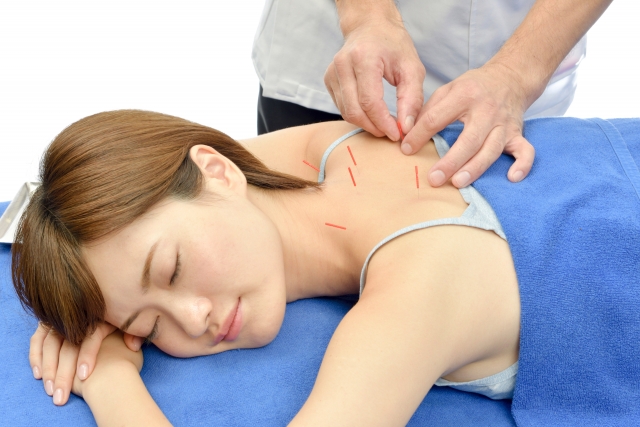
You’ll lie on a treatment table, usually undressing to comfortable underwear or wearing a provided gown. Needles are inserted — you may feel nothing, or a faint warmth or pressure. Then… you wait. Often for 15–20 minutes. Many people fall asleep. This is considered a very good sign.
Moxa may be applied before, during, or after needling. If electroacupuncture is offered, your practitioner will explain the sensation before beginning. The whole experience is calm, quiet, and carefully attentive to your comfort.
🗼 Where to Try Acupuncture in Tokyo (English-Friendly Clinics)
If you’re visiting Tokyo and feeling even slightly curious about acupuncture, you’re in luck — the city has a growing number of clinics that cater specifically to international patients. English support is more common than you might expect, especially in central neighborhoods like Azabu, Omotesando, and Shibuya.
Here are a few reliable, foreigner-friendly options to get you started:
🌿 Flow Acupuncture & Osteopathy Tokyo
4.9•Flow Acupuncture & Osteopathy Tokyo•
Located in Minami-Azabu, this clinic is a favorite among expats and travelers alike. Treatments combine acupuncture with osteopathy, making it a great choice if you’re dealing with posture-related pain or travel fatigue. The clinic is known for its calm, modern atmosphere and clear English communication.
🎋 Fuji Wellness Acupuncture
4.9•Fuji Wellness Acupuncture•
If the idea of needles makes you nervous, this is your place. They specialize in “no-pain Japanese acupuncture”, using ultra-thin needles and gentle techniques designed specifically for sensitive patients. English-speaking practitioners are available, and the clinic focuses on treating chronic pain, stress, and insomnia.
🌸 Harifune Harajuku Shinkyu Clinic
4.9•Harifune Harajuku Shinkyu Clinic•
Right in the heart of Harajuku, this clinic is convenient and highly rated. It’s a good option if you want a traditional acupuncture experience in a central, easy-to-access location — ideal for fitting into a busy Tokyo itinerary.
🌿 Tokyo Harikyu Karasumori
Located near Shinbashi, this clinic is known for its professional approach and strong reputation among both locals and international clients. A solid choice if you want something more clinical and results-focused.
🍃 SOLEIL Azabu Acupuncture Clinic
4.9•SOLEIL Azabu Acupuncture Clinic•
Popular for both wellness and beauty acupuncture, this clinic blends traditional techniques with modern aesthetics. If you’re curious about facial acupuncture (美容鍼), this is one of the more accessible entry points.
💡 Tips for Booking
- Appointments are almost always required — walk-ins are rare
- When booking, simply ask: “Do you have English-speaking staff?”
- Many clinics respond quickly via email or online forms
- Expect a short consultation before treatment (this is part of the experience, not a delay)
✨ Quick Take
If you’re staying somewhere central like Shibuya, Roppongi, or Ginza, you’re probably within 10–15 minutes of a high-quality acupuncture clinic. Tokyo isn’t just a place to see things — it’s a place to fix your body while you’re at it.
And honestly?
There are worse souvenirs than functioning shoulders.
🗾 A Brief Timeline: How Japanese Acupuncture Became What It Is
| Period | What Happened |
|---|---|
| 6th Century | Acupuncture arrives in Japan from Korea and China, alongside Buddhism |
| 701 CE | The Taihō Code officially recognizes acupuncture within Japan’s medical system |
| Edo Period (1603–1868) | Isolation accelerates uniquely Japanese development; the guide tube (shinkan) is invented by Waichi Sugiyama |
| Meiji Era (1868–1912) | Western medicine takes precedence; acupuncture’s official status declines but practice survives, particularly among visually impaired practitioners |
| Post-WWII | National licensing system established; acupuncture regains formal recognition |
| 1970s onward | International interest grows; scientific research into acupuncture mechanisms accelerates |
| Today | Cosmetic acupuncture boom; Japan is recognized globally as a leading innovator in refined acupuncture technique |
💬 My Personal Take (Because, Yes, I Have One)
I want to be clear about what I am and am not: I’m not a medical professional, and nothing in this article should be taken as medical advice. What I am is someone who has spent years dealing with neck and shoulder tension so persistent that my muscles have essentially formed a coup against me.
Japanese acupuncture has been, for me, one of the most consistently effective tools I’ve found. The combination of needle precision, hibiki‘s gentle resonance, and the deep warmth of moxa on chronically tight muscles addresses something that massage alone, stretching alone, or exercise alone doesn’t quite reach. The tension-headaches that used to appear like clockwork have become significantly less frequent and less severe.
Is this clinical proof? No. Is it the experience of one person who happens to respond very well to this modality? Yes. Your results may vary. But given that a session costs roughly the same as a mid-range restaurant meal in Tokyo — and the experience is arguably more nourishing — I’d say the risk-reward ratio is pretty compelling.
🌿 The Bottom Line
Japanese acupuncture is one of those things that, once experienced, makes perfect sense — and makes you wonder why you waited so long. It is:
- Gentle enough for first-timers and needle-phobics
- Sophisticated enough to treat complex, chronic conditions
- Precise enough to work when other approaches have failed
- Affordable enough to incorporate into a regular wellness routine
- And interesting enough — historically, philosophically, technically — to fascinate even the most skeptical visitor
Whether you’re drawn by the concept of hibiki, curious about the effects of moxa, or simply looking for relief from travel-related muscle stiffness (real talk: hauling luggage through train stations does things to your back), a visit to a Japanese acupuncture clinic is time well spent.
Japan has given the world many things: sushi, origami, bullet trains, anime, and an aesthetic philosophy that finds beauty in impermanence. Add to that list: the world’s most thoughtful, precise, and deeply humane approach to putting tiny needles into human beings.
Trust the process. Trust the hibiki. Your shoulders will thank you.
📚 Resources & References
- Ministry of Health, Labour and Welfare — Acupuncture & Moxibustion Licensing Information(厚生労働省)
- Tokyo Acupuncture & Moxibustion Practitioners Association — History of Acupuncture(東京都鍼灸師会)
- Tokyo Ariake University of Medical and Health Sciences — Acupuncture History(東京有明医療大学)
- Akamon Academy — Differences Between Chinese and Japanese Acupuncture(赤門教職員コラム)
- Japan Medical Cosmetic Acupuncture Association(日本医療美容鍼灸協会)
Note: This article is written for informational and entertainment purposes. It does not constitute medical advice. Please consult a qualified healthcare professional for any health concerns.


Share your thoughts